
A new Transatlantic crisis is gathering momentum, this time centred on Denmark’s island of Greenland. The problem lies less in the technical details of the dispute than in what it reveals: a profound European disorientation in confronting a new era in which the United States no longer appears primarily as an ally and partner, but increasingly as a competitor, and potentially even an adversary. The growing frequency and intensity of Transatlantic crises raise far-reaching questions, not only about a Western strategic partnership that endured for decades, but also about the liberal ideological foundations that shaped Western politics, culture, and economics, most notably the Democratic Peace Theory and the long-held taboo against war among societies that subscribe to it. President Donald Trump has not confined himself to economic or trade threats against Western allies; he has also resorted to explicit military intimidation. His statement suggesting the possible seizure of the Danish island by force placed allies and adversaries alike under the same threat of coercion, wielding America’s overwhelming military power as an instrument of pressure and compulsion. By force, Trump abducted Venezuela’s President Nicolas Maduro, violating the country’s sovereignty; by force, he struck at Iran’s sovereignty, directing American missiles to cripple its capabilities, and today threatens its very existence through nuclear rhetoric. By force, he seeks to impose solutions on the Palestinians in Gaza, an issue whose fundamental injustice and the historical wrong inflicted upon the Palestinian people are scarcely disputed anywhere in the world. Does this pattern of American international conduct signal the emergence of new strategic doctrines among other major powers, particularly within the Western camp?
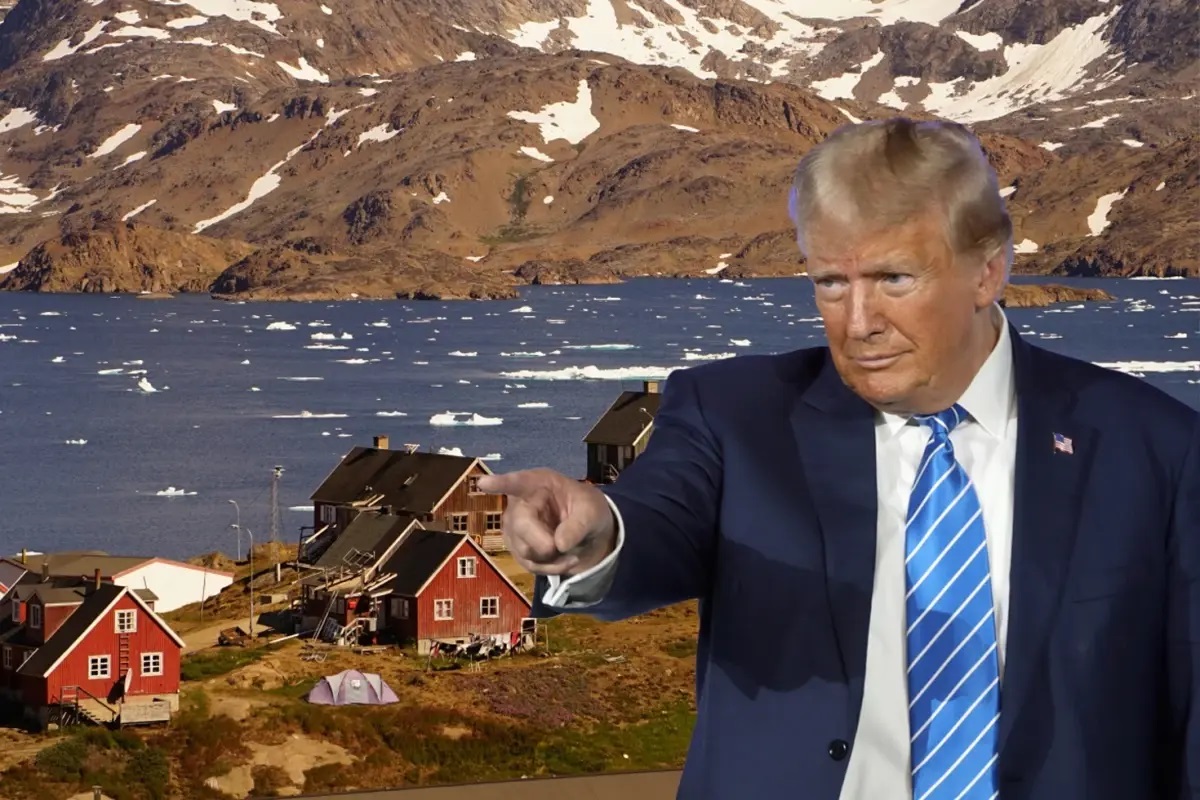
Trump’s recent threats regarding control over Greenland in the Arctic did not come as a surprise. He had floated the idea years earlier during his first term, when he publicly raised the possibility of purchasing the island in 2019 and held informal discussions with Denmark on the matter. He returned to the issue last year following his second return to office, once again issuing explicit threats. Over recent decades, geopolitical interest in the Arctic has intensified markedly, and the United States has begun to speak with increasing candour about Greenland’s strategic importance.
Greenland has long held strategic significance for the United States. As early as the nineteenth century, U.S. Secretary of State William Seward considered the acquisition of Greenland from Denmark a potentially advantageous strategic move, consistent with the era’s expansionist logic. Control over North Atlantic passages, participation as a major actor in future Arctic trade routes, competition with other great powers, and the consolidation of global standing all figured into this thinking, which formed part of a broader land-purchase strategy at the time. In 1910, proposals were discussed for a territorial exchange with Denmark that included Greenland. After the end of the Second World War, in 1946, the United States formally offered to purchase Greenland from Denmark once again, this time for $100 million, during President Harry Truman’s administration at the dawn of the Cold War. During the Second World War, the U.S. military had already constructed bases on the island; in 1951, Washington and Copenhagen concluded a defence agreement allowing the United States to retain military installations and a permanent presence. These arrangements entrenched Greenland as a strategic defensive outpost, as the United States, amid its rivalry with the Soviet Union, sought to secure Arctic positions to monitor Soviet movements and reinforce its own defensive capabilities.
Greenland’s contemporary importance to the United States stems primarily from its strategic location. Positioned at the gateway to the Arctic, between North America and Europe, the island overlooks both the Arctic Ocean and the North Atlantic, making it a critical aerial and maritime link between the two continents. It therefore functions as a strategic corridor for surface vessels and submarines transiting northern Europe and plays a vital role in Atlantic security. Situated at some of the highest northern latitudes, Greenland also offers the shortest flight paths between continents, compared with traditional air routes. The United States leverages its military presence on the island not only for operational purposes but also to monitor naval and aerial movements across the Arctic. From an American military perspective, the island’s location is additionally crucial as a potential trajectory for missile routes directed toward the United States across the Arctic. For this reason, Washington views control over Greenland’s military airspace as essential for early detection and interception in the event of a potential attack. The United States already operates a major air base on the island, equipped with radar systems and space-tracking installations designed to provide early warning. Economically, Greenland’s significance has grown as ice melt driven by climate change has opened faster Arctic shipping routes than traditional passages, reducing commercial transit times between Europe, Asia, and North America. This is compounded by the island’s substantial reserves of oil, natural gas, and strategic minerals, including uranium and rare-earth elements indispensable to modern technologies.
Trump’s statement outlining his objective of asserting control over Greenland as a means of containing Russian and Chinese influence in the Arctic appears puzzling, given the absence of any direct military or security presence by either country on or around the island. Yet Greenland’s geographic position, both in relation to the United States and to its principal polar competitors, Russia and China, offers a partial explanation for such rhetoric. The island is geographically closer to the United States than several European states to which it is politically affiliated, while remaining within strategic proximity to Russian territory. This, combined with its established role in defence and early-warning systems, underscores its enduring military value. A more comprehensive explanation, however, may lie in Trump’s broader strategic calculations and his inclination to confront the allies and partners of Russia and China. That trajectory has already manifested itself in Venezuela and continues through persistent threats directed at Iran, amid an openness to the possibility of a wider conflict. In such a scenario, the United States would seek to insulate itself against potential attacks by reinforcing forward defensive positions. Subsequent developments appear to point in precisely that direction.
Recent Western media reports indicate that the U.S. aircraft carrier strike group USS Abraham Lincoln is moving toward the Middle East after being observed sailing away from the Philippines in that direction. The region has also witnessed an uptick in U.S. aerial reinforcements in recent days, with twelve F-15E Strike Eagle fighter jets departing from RAF Lakenheath in the United Kingdom en route to the Middle East. Several international newspapers have additionally reported the movement of KC-135 aerial refuelling aircraft, alongside an accelerated tempo of C-17 flights from Britain to the region, large strategic airlifters designed to transport substantial quantities of equipment, troops, and heavy vehicles. Trump has likewise spoken of further reinforcements that could be deployed to the area, including missile cruisers and destroyers, fighter squadrons from the U.S. Air Force, and ground-based air-defence missile systems. Earlier reports also noted the transfer of an advanced Virginia-class nuclear submarine to a U.S. base in the western Pacific, near China. Taken together, these recent American movements can be understood as part of a broader effort to raise military readiness across multiple theatres. The United States currently maintains roughly 30,000 troops in the Middle East, stationed in countries such as Qatar, Jordan, Syria, and Iraq. Leaked information has also indicated a temporary evacuation of aircraft and personnel from Al Udeid Air Base in Qatar.
Trump’s recent remarks on Greenland have triggered a political crisis with Western allies, who have viewed them as a violation of Denmark’s sovereignty and, by extension, of Europe’s as a whole. Trump announced that the United States would impose a 10 per cent tariff on imports from eight countries, including France, Germany, the United Kingdom, and the Netherlands, beginning early next month. The tariffs would rise to 25 per cent by midyear should those states refuse to acquiesce to Washington’s purchase of Greenland, which Trump has framed as a matter of U.S. national security. As he has escalated his ambitions regarding the island, Europe has responded with a unified front rejecting any alteration to Greenland’s sovereignty or any attempt at annexation. Eight European countries, including France, Germany, and the United Kingdom, issued a joint statement rejecting the American threat to escalate tariffs against states that support Danish and Greenlandic sovereignty. The statement warned that such measures “undermine Transatlantic relations, threaten allied security, and risk pushing those relations toward a dangerous deterioration.”
France has called for the activation of the European Union’s anti-coercion mechanisms should Trump carry out his threats, an instrument designed to restrict U.S. companies’ access to the EU’s single market. The European response has also emphasised the need to strengthen security cooperation in the Arctic region, while warning of the risks U.S. policy poses to NATO’s future and to cohesion among allies. At the same time, proposals for economic countermeasures and retaliatory tariffs have begun to surface, aimed at safeguarding European sovereignty against American ambitions that now directly affect Western partners. The European Union did not ratify the framework trade agreement with Washington last July, following months of mounting opposition within the European Parliament. That resistance reached a peak on Saturday when the Parliament’s largest political bloc, the centre-right European People’s Party, announced it would not support the agreement under the shadow of Trump’s threats. Last year, the European bloc also drafted a list of potential tariff sanctions worth up to €93 billion in response to U.S. policies. While these measures have not been implemented, the list remains a viable instrument should European leaders choose to activate it at their meeting coinciding with the ongoing Davos Economic Forum.
These developments point to a widening rift within NATO, the world’s largest and most powerful collective military alliance, and have heightened European anxiety over the alliance’s cohesion and the broader implications for European security. The moment recalls the crisis engineered by Trump during his first presidency, when he challenged NATO’s funding arrangements, threatened U.S. withdrawal, and pressured member states to raise their defence contributions to 5 per cent of national budgets to relieve Washington of what he described as a disproportionate financial burden. That episode sounded alarm bells across Europe regarding the durability of its alliance with the United States. Trump subsequently compounded the crisis by imposing tariffs on Western partners earlier this year, only to later retreat from those measures.
Trump’s threats have rippled through financial markets: the dollar index and U.S. equities declined, while competing safe-haven assets such as gold and silver rose, reflecting investor unease over the prospect of a broader trade escalation. Despite its military and economic power, the United States has a critical vulnerability: it relies on others to finance its debt through a large external deficit. U.S. national debt now exceeds $38 trillion, and the country recorded a deficit of $1.78 trillion in 2025. Europe stands as the United States’ largest creditor, with European countries holding roughly $8 trillion in U.S. bonds and equities. The dollar, moreover, derives its value from the standing and credibility of the United States rather than from gold backing, leaving it exposed whenever confidence in Washington erodes.
France’s finance minister has warned that any American attempt to assert control over Greenland would prompt Europe to seek alternative trade partners and to reinforce multilateral options, an opening that could, over time, enhance the appeal of cooperation with the BRICS bloc. Heightened tensions between Europe and the United States may thus create strategic space for BRICS member states to advance their collective agenda. BRICS is a global economic grouping established in 2009, originally comprising Brazil, Russia, India, China, and South Africa, and later expanded to include additional countries. The bloc’s core objective has been to deepen cooperation among emerging economies and to rebalance the global financial system away from Western dominance and the U.S. dollar, a trajectory reinforced by recurring economic crises and by U.S. and Western sanctions imposed on countries such as Russia and Iran. BRICS members argue that reliance on traditional international trading systems that use the U.S. dollar as the principal reserve and settlement currency constrains their economic growth and exposes their economies to destabilising shocks, particularly during periods of heightened geopolitical tension.
Within BRICS, proposals have emerged to develop a “common currency” or, more realistically, a BRICS-based payment architecture to reduce dependence on the U.S. dollar and move toward digital financial settlements conducted in member states’ official local currencies. The bloc has increasingly sought to expand non-dollar payment mechanisms, reflecting a broader effort to distance itself from the SWIFT interbank messaging system, which is widely viewed as being subject to U.S. influence. India’s central bank has recently proposed linking the official central bank digital currencies (CBDCs) of BRICS countries to facilitate cross-border trade and payments, an initiative that would gradually lessen reliance on the dollar. Although there is no consensus within BRICS on creating a unified currency, Moscow and Beijing have taken the lead in promoting the “BRICS Pay” initiative, an electronic payment messaging system designed to facilitate trade among member states using their national currencies. Notably, the use of non-dollar currencies in global commodity trade, particularly in oil transactions, has increased markedly in recent years. Despite these efforts, the U.S. dollar remains the world’s dominant reserve currency; however, its share of global reserves has been declining, signalling a gradual erosion of its dominance. Trump has warned BRICS countries against attempting to replace the dollar as a reserve currency, reiterating earlier threats to impose steep tariffs in response. The question that remains is whether the euro and the currencies of BRICS states can meaningfully reduce global dependence on the U.S. dollar in the near term, amid escalating international tensions fueled by Trump’s conduct on the world stage.
Dr. Sania EL-HUSSEINI