
belt and road initiative »
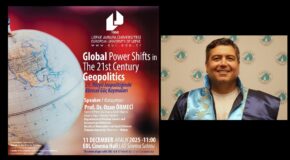
PROF. DR. OZAN ÖRMECİ’DEN YENİ KONFERANS: “GLOBAL POWER SHIFTS IN THE 21ST CENTURY GEOPOLITICS”
Üsküdar Üniversitesi öğretim üyesi ve Uluslararası Politika Akademisi (UPA) Genel Koordinatörü Prof. Dr. Ozan Örmeci, 11 Aralık 2025 tarihinde KKTC-Kuzey Kıbrıs’ta Lefke Avrupa Üniversitesi’nde düzenlenen özel bir konferansa konuk oldu ve “Global Power Shifts
Read More »
PROF. DR. OZAN ÖRMECİ’DEN YENİ KİTAP BÖLÜMÜ: “DIFFERENT INTELLECTUAL REACTIONS TO THE RISE OF CHINA”
Üsküdar Üniversitesi öğretim üyesi ve Uluslararası Politika Akademisi (UPA) Kurucu Genel Koordinatörü Prof. Dr. Ozan Örmeci’nin yazdığı “Different Intellectual Reactions to the Rise of China” adlı kitap bölümü, Nobel Akademik Yayıncılık tarafından yayınlanan ve
Read More »
UKRAINE CRISIS: CHANCE FOR PEACE MUST NOT BE WASTED
Introduction After the Alaska Summit between U.S. (United States) President Donald Trump and Russian President Vladimir Putin on August 15, 2025[1], efforts to end mass killings in the Russia-Ukraine War have intensified with subsequent
Read More »
THE FAILURE OF THE COLLECTIVE WEST: A FRIEND’S EYE IS A GOOD MIRROR
9 years ago, when one of the few Russian allies and countries in the “Russkiy mir“, Ukraine was heading towards Western integration, I wrote a piece entitled “Events in Ukraine Symbolize the Ultimate Victory
Read More »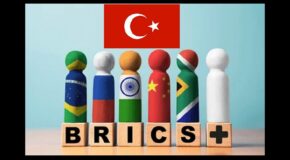
CAN TÜRKİYE JOIN BRICS+?
Introduction Having been pointed out as one of the 6 key “swing states” of the 21st century -together with Brazil, India, Indonesia, Saudi Arabia, and South Africa- by Cliff Kupchan[1], Türkiye is an important
Read More »
UPA STRATEGIC AFFAIRS DERGİSİNİN 4. CİLT 1 NOLU SAYISI YAYIMLANDI
Uluslararası Politika Akademisi (UPA) ekibince hazırlanan ve yayın hayatına 2020 yılında başlayan UPA Strategic Affairs adlı uluslararası hakemli akademik e-derginin 4. cilt 1 nolu sayısı yayımlandı. Birçok Türk ve yabancı akademisyenin editör, hakem ve
Read More »UPA STRATEGIC AFFAIRS DERGİSİNİN ÜÇÜNCÜ CİLT İKİ NOLU SAYISI YAYIMLANDI
Uluslararası Politika Akademisi (UPA) ekibince hazırlanan ve yayın hayatına 2020 yılında başlayan UPA Strategic Affairs adlı uluslararası hakemli akademik e-derginin 3. cilt 2 nolu sayısı yayımlandı. Birçok Türk ve yabancı akademisyenin editör, hakem ve
Read More »
DOÇ. DR. OZAN ÖRMECİ’DEN YENİ ULUSLARARASI BİLDİRİ: “SINO-TURKISH RELATIONS AND THE BELT AND ROAD INITIATIVE”
İstanbul Kent Üniversitesi Siyaset Bilimi ve Kamu Yönetimi bölümü öğretim üyesi ve Uluslararası Politika Akademisi (UPA) Kurucu Genel Koordinatörü Doç. Dr. Ozan Örmeci, 3-4 Aralık 2021 tarihlerinde Erivan’da Rus-Ermeni Üniversitesi’nde düzenlenen “III Eurasian Research
Read More »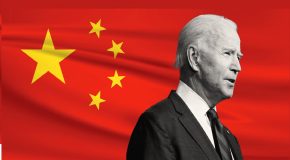
THE U.S. NEEDS STRATEGIC THINKING IN RELATIONS WITH CHINA
Although domestic policy issues are more important these days in the United States due to Covid-19 (coronavirus) pandemic and the ongoing economic crisis, Joe Biden administration’s foreign policy also has begun to be shaped
Read More »
(DE)GLOBALIZATION AND THE ASIANIZATION OF THE WORLD ECONOMY
The COVID-19 pandemic came at a time of diminishing role of the U.S. from the international scene, re-emergence of China as a global power, strengthening Asia-Pacific region, heightened protectionism, weakening international cooperation, rising discontent from
Read More »