
It has become clear that Benjamin Netanyahu and his right-wing government are seeking to leverage their current alignment with the administration of U.S. President Donald Trump, a government that strongly backs Israeli policies, to cement a reality in Palestine that will be difficult to reverse in the future.
Under Israeli law, general elections are ordinarily held in October of the fourth year of the Knesset’s term, unless the Knesset is dissolved earlier. Although the term can, in theory, be extended, such a step is subject to strict and exceptional conditions, such as a full-scale war or a grave security emergency that makes elections impossible. A postponement cannot be effected under government emergency regulations or through an administrative decision suspending the Basic Law governing elections. If such a step were to be taken, it would require the passage of a special law by the Knesset, approved by at least 80 of its 120 members, a threshold that is rarely attainable in practice. This has occurred only once before, during the October War of 1973, when elections were briefly delayed.
A poll conducted last month indicated that the opposition bloc would secure 61 out of 120 seats, compared with 49 for the parties currently participating in Netanyahu’s governing coalition and 10 for Arab parties if they ran separately. Such an outcome would, on paper, allow the opposition to form an alternative government. Yet the central complication lies elsewhere. Netanyahu’s Likud Party continues to lead all major opinion polls, with projected support ranging from 26 to 31 seats, positioning it as the largest party and the most viable anchor for the next governing coalition. While recent surveys show a modest decline in Likud’s support, and a more pronounced drop in the popularity of the Religious Zionism Party led by Bezalel Smotrich, the ultra-Orthodox parties Shas and United Torah Judaism, along with the far-right Jewish Power party led by Itamar Ben-Gvir, have maintained relative stability.
These trends unfold against a broader current within Israeli public opinion. Multiple polls suggest that between 57 and 59 per cent of the Israeli Jewish public oppose the establishment of a Palestinian State under any circumstances. Between 58 and 70 per cent support expanding Israeli sovereignty and control over the West Bank, while 42 per cent favour annexing the territory without granting equal rights to Palestinians. Taken together, these indicators suggest that what is unfolding in the Palestinian territories is not a passing political phase. Rather, it reflects a deeper Israeli trajectory, one embraced and advanced by Netanyahu’s government, that is reshaping realities on the ground in ways that may prove difficult to reverse in the foreseeable future.
What is unfolding in Gaza after the war amounts to a comprehensive re-engineering of the Strip, security-wise and demographically, in ways designed to preclude any meaningful form of Palestinian sovereignty. This is evident in the conditioning of reconstruction on the disarmament of Gaza, coupled with the rejection of any political or administrative role for either the Palestinian Authority or Hamas. In their place, what is being advanced is a technocratic Palestinian administrative body confined to service provision, structured according to American and Israeli parameters. This approach aligns with Israel’s repeated assertion that it has no intention of relinquishing security control over the territory. Official Israeli statements have made clear that Israel intends to retain security control “from the river to the sea”, including in Gaza, even after a ceasefire. Such declarations effectively drain any proposed “second phase” of its political substance. In this context, the promise of reconstruction functions less as a humanitarian commitment and more as an instrument of political and security leverage. The daily human suffering produced by the war is being folded into a broader strategy, one that seeks to secure Israel’s stated objectives by reshaping the political and territorial realities on the ground.
Israel’s objectives in Gaza extend beyond territorial control and security dominance. They also encompass the reordering of the Strip’s geographic and demographic reality. Plans to empty densely populated areas, confine residents to limited zones, and construct monitored encampments in the far south of the Strip near the Egyptian border point to a strategy that goes well beyond managing a civilian population. They align more closely with prior statements by Israeli officials regarding population transfer. The trajectory suggests not merely oversight, but structural transformation. This approach is reinforced by Israel’s insistence on full control over border crossings, as well as the movement of people and goods. Such control would effectively preserve the conditions of siege and sustained oversight of the territory. In that environment, future measures, whatever form they take, would be easier to implement.
On the other side of Palestine, the West Bank, including Jerusalem, is subject to coercive measures no less severe than those imposed on Gaza, despite having been politically removed from the events of October 7. Israeli authorities appear to be pursuing a calibrated policy aimed at eroding the standing of the Palestinian Authority, weakening it economically while steadily stripping it of administrative prerogatives in areas nominally under its control. Between the withholding of clearance revenues, the exhaustion of the Palestinian economy, mounting constraints on banking operations, and tighter restrictions on workers’ permits, the Authority finds itself under acute financial strain. These pressures are compounded by what increasingly resembles a deliberate effort to render the Authority functionally ineffective. This is visible in the sustained military incursions into Palestinian cities and towns, whether for arrests, demolition operations, or displays of force, alongside the accelerating pace of settler attacks on Palestinian lives and property. In such circumstances, the Authority’s ability to respond, let alone assert control, has been steadily diminished.
These measures are not aimed solely at diminishing the Palestinian Authority’s standing. At their core lies a broader policy: consolidating control over land while making daily life increasingly untenable for Palestinians in their own country. Israel no longer limits itself to tight security control over the West Bank, nor to the gradual incorporation of Palestinian land through incremental expansion. Its intentions are now articulated with greater candour. Settlement activity is no longer confined to roughly two-thirds of the West Bank, the areas designated as “Area C”. It has extended into the remaining third, Areas “A” and “B”, despite the dense Palestinian population in those zones. This expansion unfolds alongside legislation and government decisions that facilitate the confiscation of Palestinian land, the demolition of structures, and, in certain cases, the formal transfer of those properties into Israeli hands.
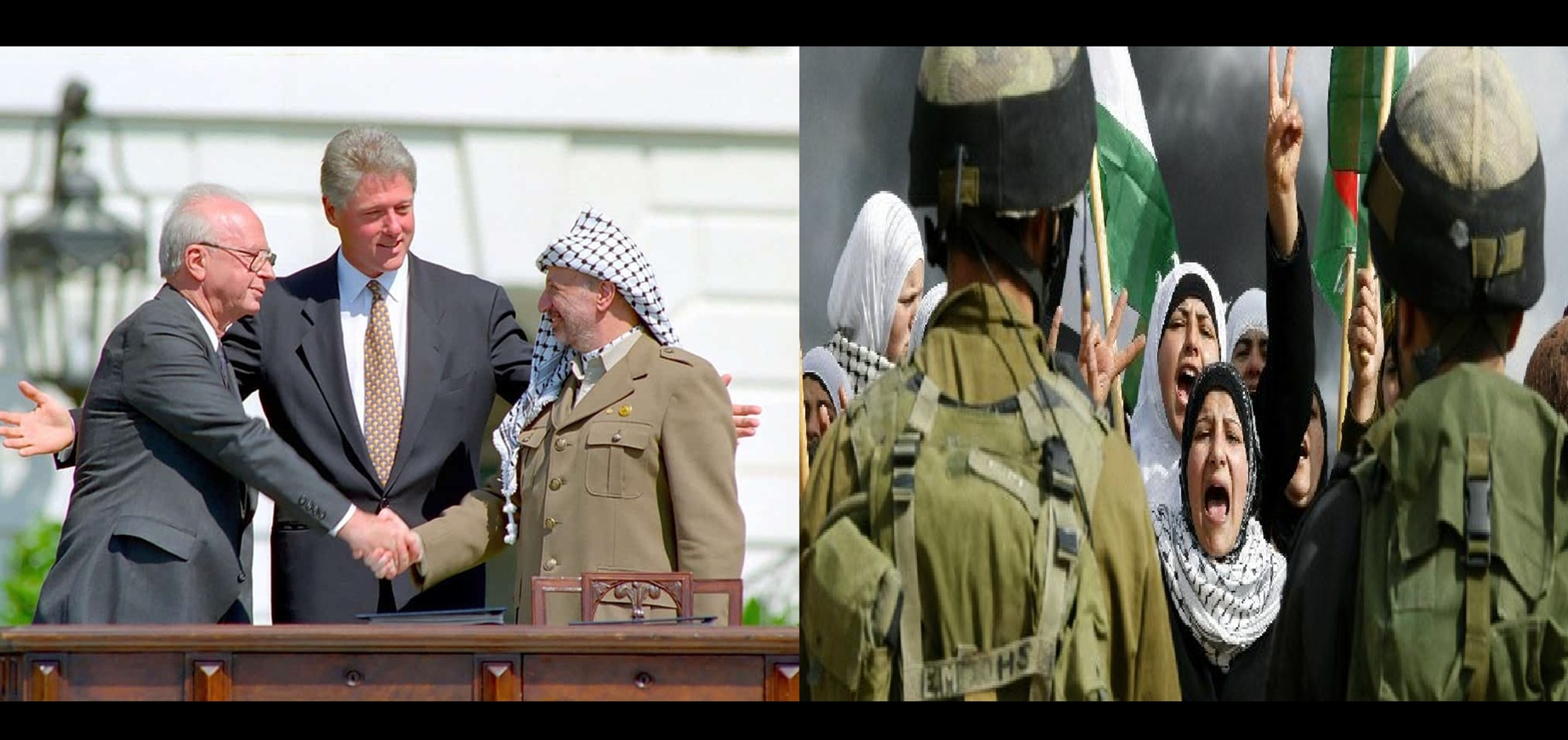
Decisions issued days ago by Israel’s Security and Political Cabinet signal a qualitative shift in the management of the West Bank. What had long been framed as a model of “temporary military administration” is giving way to one of entrenched civil-legal control. The implications are far-reaching: the status of land and property, the scope of the Palestinian Authority’s powers, the viability of the two-state framework, and even the legal character of the occupation itself all stand to be affected. For all their gravity, these decisions do not emerge in isolation. They reflect a continuum, from the military and settlement-driven policies that predated Oslo to the security-centred, expansionist approach that followed it, and, more recently, to the sharp escalation since the end of 2022, with the rise of Netanyahu’s right-wing government. The trajectory points toward the imposition of a decisive reality in the Palestinian territories, one increasingly difficult to reverse.
The Cabinet decisions focused in particular on annulling the Jordanian law in force prior to 1967 that prohibited the sale of land in the West Bank to non-Palestinians. Its cancellation now opens the door for Israelis to acquire Palestinian land in the territory. The measures also authorise the opening and publication of Palestinian land registries, which had previously been closed to Israeli access. This step facilitates sales and purchases and the systematic monitoring of ownership procedures by Israeli authorities. In effect, Palestinian land would be drawn into Israel’s own legal framework governing property and land registration, integrating it into the Israeli land registry system. At the same time, the decisions expand Israeli authorities’ powers to apply Israeli law in areas populated by Palestinians. Planning and building powers in certain Palestinian zones have been transferred to Israeli bodies, including in Hebron and the area surrounding the Ibrahimi Mosque. This shift enables Israel to determine the scope and limits of Palestinian urban development, while opening the way for settlement expansion in locations where such expansion had previously not been authorised.
The decision also broadens Israel’s authority to regulate environmental matters, antiquities, water resources, and even building violations in Areas “A” and “B”, zones that, under the Oslo framework, fall under the administration of the Palestinian Authority. In practice, this strips the Authority of core administrative powers in territories that were formally designated as being under its jurisdiction. These steps come against the backdrop of an established Israeli trajectory: reducing the overt military character of governance in the occupied West Bank while strengthening a system of civil and administrative control over Palestinians. Israeli law had already been extended to settlers residing in the West Bank; what is now unfolding suggests a gradual institutionalization of Israeli governance structures across the territory, moving toward a more permanent and systematized form of rule.
Even in the absence of a formal Israeli declaration of annexation, the Cabinet’s executive measures, opening Palestinian land registries to Israeli access and ownership, transferring planning powers to Israeli authorities, expanding enforcement authority, and imposing what amounts to functional Israeli sovereignty on the ground, constitute a significant step toward integrating the West Bank into Israel’s legal system. These policies erode the Palestinian Authority’s powers and hollow out its functional role. They amount to a unilateral alteration of the Oslo framework. As a bilateral agreement, Oslo rests on reciprocal obligations; a fundamental change imposed by one party raises the legal question of whether the other party retains the right, under international law governing treaties, to withdraw from the agreement.
Paradoxically, these Israeli decisions may also reinforce the Palestinian legal argument that the transitional framework established by Oslo has effectively run its course. They do not alter the underlying condition of curtailed sovereignty imposed by occupation. Sovereignty, in the Palestinian case, derives in essence from popular representation, from a people living under occupation, rather than from the limited administrative competencies defined by interim arrangements. These measures affect the functional boundaries of governance granted to the Palestinian Authority under the Oslo understandings. They do not extinguish the broader legal foundation upon which Palestinian legitimacy rests. That legitimacy draws from the peremptory norm of the right to self-determination, from the corpus of international legality, from the wide international recognition of the State of Palestine, and from its acknowledgment by the United Nations, numerous international organizations and treaty bodies, as well as from opinions issued by international courts.
These rapid shifts under Netanyahu’s government are unfolding through tools deployed on a wide scale and with an unprecedented degree of simultaneity. Chief among them is the extensive destruction of infrastructure in Palestinian cities and villages, not only in Gaza, but increasingly in the West Bank as well, including in Areas “A” and “B”, which fall under the Palestinian Authority’s administration. The occupation has also relied on a policy of large-scale lethal force against Palestinian civilians. While the death toll in Gaza has reached into the tens of thousands, the West Bank faces a structured pattern that combines the killing of hundreds of Palestinians with escalating settler attacks, often deadly and destructive, alongside mounting restrictions on movement and daily life. The steadily intensifying constraints on freedom of movement in both the West Bank and Gaza, even in the aftermath of declared ceasefires, suggest that Israeli military policy continues in practice. The formal announcement of a halt to hostilities has not translated into a substantive end to the measures reshaping Palestinian life on the ground.
These Israeli policies in the West Bank, including Jerusalem, and in Gaza cannot be dismissed as temporary or episodic. They form part of an integrated strategic vision directed at Palestinians and at the future of their presence on their land in both territories. Developments in the West Bank cannot be read in isolation from what is unfolding in Gaza. Together, they aim to entrench a reality that is difficult to reverse, while clearing the path for plans that Israeli officials have articulated with unusual openness. Such shifts require a decisive and unified Palestinian policy, one that confronts the risks head-on, strengthens steadfastness on the ground, and articulates a forward-looking vision beyond the Oslo era. Arab states, too, face a moment of choice. A coordinated and firm Arab position toward the occupying power and its policies is essential, coupled with the use of political and economic leverage with Western partners to press for meaningful action, not merely statements of concern. The current conflict in Palestine stands at a crossroads. It is not a moment that allows for further deferral.
Dr. Sania F. El-HUSSEINI