
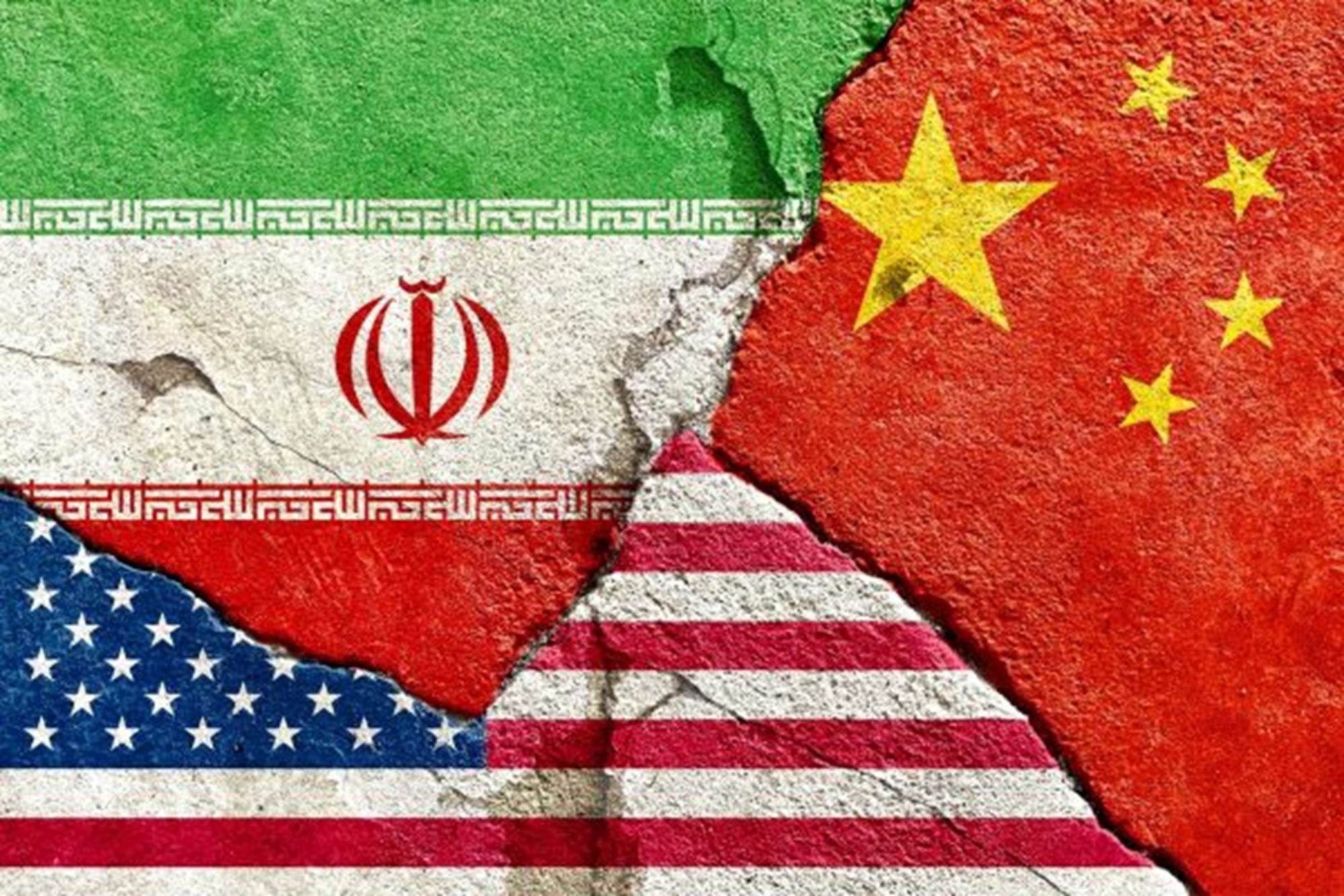
The Middle East is once again standing at the centre of global geopolitical turbulence. Rising tensions between the United States and Iran have triggered renewed fears of military escalation, disruptions in global energy markets and a broader regional crisis that could quickly extend beyond the Persian Gulf. Yet beneath the visible confrontation between Washington and Tehran, another geopolitical reality is quietly taking shape, one that may ultimately reshape the balance of global power far beyond the Middle East itself.
The hidden strategic beneficiary of a prolonged U.S.-Iran confrontation may not be Iran, Russia or even regional proxy actors. Increasingly, that actor appears to be China.
Recent discussions within American strategic and intelligence circles reflect growing concern over this possibility. Reports published by the Washington Post, based on assessments linked to U.S. intelligence sources, suggest that American policymakers are becoming increasingly aware that every new wave of instability in the Middle East simultaneously creates strategic openings for Beijing. While Washington becomes more deeply consumed by military calculations, deterrence strategies, and regional security burdens, China continues to expand its economic, diplomatic, and geopolitical influence across the region with remarkable patience and minimal direct exposure. This transformation reveals a deeper structural shift within the international system itself.
For decades after the Cold War, the United States maintained unrivalled influence in the Middle East through military superiority, strategic alliances and control over global energy security architecture. American foreign policy toward the region was largely driven by three fundamental priorities: protecting energy flows, guaranteeing Israel’s security and countering terrorism. However, the strategic environment of the twenty-first century is fundamentally different from the unipolar moment that followed the collapse of the Soviet Union.
Today, Washington’s broader geopolitical calculations increasingly revolve around a far more consequential issue: managing China’s rise. From this perspective, Iran is no longer viewed solely as a regional adversary associated with nuclear ambitions or proxy warfare. Instead, Tehran has become part of a much larger strategic equation connected to Eurasian geopolitics, energy corridors and the future balance of global power.
China’s approach to the Middle East differs significantly from the traditional Western model of power projection. Beijing rarely seeks direct military confrontation or ideological intervention. Instead, it expands its influence through infrastructure investments, trade networks, financial dependence, technological penetration, and long-term strategic partnerships. In many ways, China is redefining how geopolitical power is accumulated in the modern era.
Ports have become strategic assets. Energy agreements have become instruments of influence. Digital infrastructure has become a geopolitical battlefield. And trade corridors have become tools of global competition.
This strategy is most visible within the framework of China’s Belt and Road Initiative (BRI). Through this enormous transcontinental project, Beijing seeks to establish economic connectivity stretching from East Asia to Europe, passing directly through some of the world’s most geopolitically sensitive regions. Within this architecture, the Middle East occupies an indispensable position.
Iran, in particular, represents a critical node in China’s long-term strategic vision. The comprehensive 25-year cooperation agreement signed between China and Iran in 2021 was not merely an ordinary economic partnership. It was a geopolitical signal. The agreement covered cooperation in energy, transportation, infrastructure, ports, telecommunications and security coordination. More importantly, it reflected Beijing’s determination to secure long-term strategic access to the Persian Gulf and surrounding transit routes without becoming militarily entangled in regional conflicts. This is precisely where China’s geopolitical sophistication becomes visible.
Unlike traditional great powers that often exhaust themselves through military overextension, Beijing seeks to convert instability into strategic leverage while remaining relatively distant from direct confrontation. As the United States carries the political and financial burden of military deployments, regional deterrence and alliance management, China quietly strengthens its economic foothold and observes regional fragmentation from a comparatively advantageous position.
In many respects, China benefits from strategic patience. Every escalation between Washington and Tehran increases uncertainty in global energy markets. Yet these crises deepen regional states’ desire for diversified partnerships beyond the United States. Countries throughout the Middle East increasingly pursue multidirectional foreign policies, balancing relations among Washington, Beijing and Moscow rather than depending exclusively on a single power centre.
China has recognised this transformation earlier than many Western policymakers. Beijing’s diplomatic mediation between Saudi Arabia and Iran demonstrated that China is no longer merely an economic actor operating in the background. It is gradually emerging as a diplomatic and geopolitical stakeholder capable of influencing regional political outcomes. This development carries symbolic significance because it challenges one of the central pillars of post-Cold War American dominance in the Middle East: the assumption that Washington would remain the region’s indispensable external power.
The growing strategic competition between the United States and China increasingly resembles a broader hegemonic transition within the international system. Historically, periods of global power transition have rarely occurred peacefully. Rising powers seek greater influence, while established hegemonic powers attempt to preserve the existing order. The resulting rivalry often extends across multiple regions simultaneously; economically, technologically, diplomatically and militarily.
The Middle East is now becoming one of the principal arenas of this competition. Yet China’s methods differ from classical imperial models. Beijing does not primarily seek territorial control or large-scale military occupation. Instead, it builds influence through financial integration, energy dependency, logistics infrastructure and technological connectivity. This quieter form of power projection may ultimately prove more sustainable than traditional military dominance. For Washington, this creates a difficult strategic dilemma.
If the United States disengages from the Middle East, it risks allowing China to further expand its regional influence. However, if Washington remains preoccupied with endless regional crises and military tensions, it may simultaneously weaken its ability to compete with Beijing on the global stage. This paradox increasingly defines contemporary American foreign policy.
The crisis surrounding Iran, therefore, cannot be understood solely through the lens of nuclear negotiations, proxy conflicts or regional deterrence. It is also deeply connected to the future architecture of global order itself. Beneath every confrontation in the Persian Gulf lies a broader geopolitical struggle concerning who will shape the economic and strategic networks of the twenty-first century.
China understands that the future of global influence may not depend exclusively on military supremacy. It may instead depend on control of energy routes, infrastructure systems, digital networks, and trade connectivity. This is why Beijing continues to advance carefully, patiently and strategically throughout the Middle East. And this is why a prolonged confrontation between the United States and Iran may ultimately accelerate not only regional instability, but also China’s rise as a decisive global power in the emerging multipolar order.

Dr. Hande ORTAY