
Introduction
The international system has undergone profound structural transformations during the first decades of the twenty-first century. The traditional understanding of power, which for centuries was primarily associated with military capability, territorial expansion, and coercive diplomacy, has gradually evolved into a multidimensional concept in which economic strength occupies an increasingly central position. Although armed forces, strategic alliances, and geopolitical influence continue to shape international politics, they are no longer sufficient to explain the changing patterns of global competition. Instead, economic capacity, technological innovation, financial resilience, industrial productivity, and control over strategic resources have become indispensable components of state power.
Historically, international relations scholarship has largely been dominated by security-oriented perspectives. Classical realism, neorealism, and geopolitical theories have traditionally portrayed military capability as the principal determinant of international influence. Within these frameworks, states have been conceptualized as rational actors seeking survival in an anarchic international environment through the accumulation of military power and strategic deterrence. Consequently, diplomacy itself was often interpreted as an extension of security policy designed to manage interstate conflicts, negotiate alliances, and preserve the balance of power.
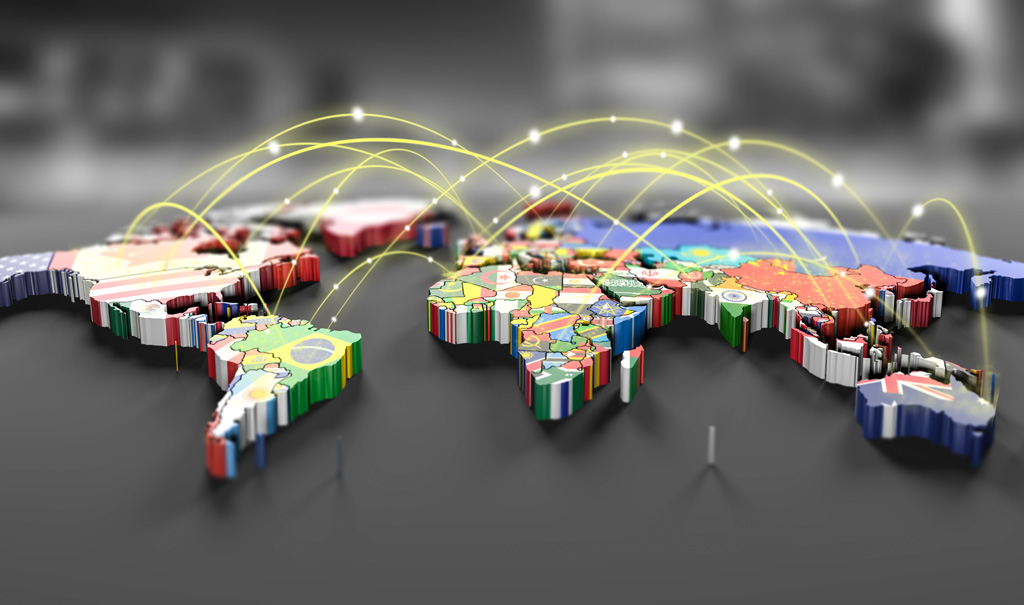
However, the accelerating forces of globalization have fundamentally challenged this conventional understanding. The rapid expansion of international trade, financial integration, technological innovation, multinational production networks, and digital communication has transformed the nature of interstate interaction. States no longer compete solely through military confrontation; they increasingly compete through markets, investment flows, technological leadership, infrastructure development, financial institutions, and innovation ecosystems. Economic performance has become a strategic asset capable of generating geopolitical influence comparable to, and in many cases exceeding, traditional military capabilities.
Consequently, the concept of power itself has become considerably more complex. Contemporary international relations increasingly recognize that economic resources are not merely instruments supporting political objectives but constitute autonomous sources of international influence. Economic interdependence simultaneously creates opportunities for cooperation and new forms of vulnerability, compelling governments to reconsider the relationship between national security and economic policy. As a result, foreign policy strategies are becoming progressively integrated with economic planning, industrial development, technological innovation, and global investment policies.
Within this changing environment, economic diplomacy has emerged as one of the defining concepts of contemporary international relations. Far from representing a simple extension of commercial diplomacy, economic diplomacy has evolved into a comprehensive foreign policy instrument through which governments pursue strategic national interests using economic means. It encompasses trade negotiations, investment promotion, development assistance, financial cooperation, technology partnerships, energy security, infrastructure financing, digital governance, industrial policy, and supply chain management. In this sense, economic diplomacy occupies the intersection of international political economy, diplomacy, and national security, reflecting the growing inseparability of economics and geopolitics in the twenty-first century (Bayne & Woolcock, 2017).
The growing prominence of economic diplomacy reflects broader transformations within the global political economy. Following the end of the Cold War, expectations emerged that globalization would produce increasing economic integration, declining geopolitical rivalry, and expanding multilateral cooperation. During the 1990s and the early years of the new millennium, liberal economic principles appeared to dominate international affairs, encouraging unprecedented levels of cross-border trade, foreign direct investment, financial liberalization, and technological diffusion. Global production networks became increasingly interconnected, allowing firms and governments to benefit from economies of scale, comparative advantages, and expanding international markets.
Nevertheless, these optimistic assumptions have gradually been challenged by a series of global crises. The 2008 Global Financial Crisis exposed the fragility of international financial markets and demonstrated that economic instability could rapidly evolve into political and strategic instability. Rather than reinforcing confidence in globalization, the crisis encouraged many governments to reassess the vulnerabilities associated with excessive financial dependence and uncontrolled market integration. Economic resilience consequently became a strategic objective of national policy rather than merely an economic concern.
Subsequent global developments further accelerated this transformation. The COVID-19 pandemic revealed unprecedented weaknesses in global supply chains, pharmaceutical production, logistics networks, and international manufacturing systems. Governments around the world experienced severe shortages of essential medical equipment, semiconductor components, industrial inputs, and critical technologies. These disruptions highlighted that excessive dependence upon foreign production could directly threaten national security and public welfare. Economic security therefore became inseparable from strategic security.
The outbreak of the Russia–Ukraine War reinforced this perception even further. Europe’s heavy dependence on Russian natural gas demonstrated how economic interdependence could be transformed into geopolitical leverage. Energy markets rapidly became instruments of strategic competition, illustrating that access to critical resources constitutes one of the principal dimensions of modern statecraft. The conflict simultaneously accelerated diversification strategies, investments in renewable energy, liquefied natural gas infrastructure, and regional energy cooperation, thereby further expanding the scope of economic diplomacy.
Parallel to these geopolitical developments, technological competition has emerged as perhaps the defining characteristic of contemporary great-power rivalry. Unlike previous historical periods in which territorial conquest represented the principal source of national wealth, the twenty-first century increasingly rewards technological superiority. Artificial intelligence, quantum computing, biotechnology, cybersecurity, semiconductor manufacturing, advanced robotics, digital infrastructure, satellite systems, and data governance now represent strategic sectors capable of determining the future distribution of global power.
The strategic competition between the United States and China clearly illustrates this transformation. Their rivalry extends far beyond conventional trade disputes and encompasses export controls on advanced semiconductor technologies, restrictions on artificial intelligence development, competition over rare earth minerals, investment screening mechanisms, technological standards, digital platforms, and infrastructure financing. Economic competition has thus become deeply intertwined with questions of national security, technological sovereignty, and geopolitical influence.
From a theoretical perspective, these developments require a broader understanding of power than that provided by classical realist approaches. Robert Keohane and Joseph Nye’s theory of complex interdependence offers an important analytical framework by emphasizing that military force is not the sole determinant of international influence. Economic relations generate political dependencies, institutional linkages, and strategic asymmetries that reshape interstate behaviour (Keohane & Nye, 2012). Similarly, Susan Strange’s concept of structural power demonstrates that states capable of shaping international production systems, financial markets, technological standards, and global knowledge networks possess forms of influence that frequently exceed those derived from military capabilities alone (Strange, 1994).
Recent scholarship has further expanded this perspective through the emergence of the concept of geoeconomics, which conceptualizes economic instruments as strategic tools of statecraft. Rather than relying exclusively upon military coercion, governments increasingly employ sanctions, tariffs, export controls, investment restrictions, infrastructure financing, development assistance, sovereign wealth funds, and technological cooperation to achieve geopolitical objectives. In this context, economic diplomacy serves not merely as a mechanism of international cooperation but also as a sophisticated instrument of strategic competition, capable of projecting national influence while minimizing the political and economic costs associated with military confrontation (Blackwill & Harris, 2016).
These developments demonstrate that economic diplomacy should no longer be interpreted simply as a subset of foreign economic policy. Instead, it represents a comprehensive strategic framework integrating economic governance, industrial policy, technological innovation, energy security, international finance, and geopolitical strategy into a coherent approach to international engagement. Contemporary governments increasingly recognize that long-term national competitiveness depends upon their ability to secure resilient supply chains, attract foreign investment, promote innovation ecosystems, diversify energy resources, and strengthen strategic industries capable of competing within the global knowledge economy.
For middle powers such as Türkiye, these structural transformations create both significant opportunities and complex challenges. Situated at the intersection of Europe, Asia, the Middle East, and the Caucasus, Türkiye occupies one of the world’s most strategically important geopolitical locations. Its position along major energy corridors, transportation routes, maritime trade networks, and emerging digital infrastructure projects provides considerable potential for expanding its economic diplomacy. Simultaneously, increasing investments in defence industries, renewable energy, logistics infrastructure, advanced manufacturing, and regional connectivity initiatives offer new instruments through which Türkiye can enhance both its regional influence and its global competitiveness.
Against this broader international context, this study argues that economic diplomacy has become one of the most decisive instruments of contemporary statecraft. The transformation of the international system from a predominantly geopolitical order into an increasingly geo-economic one requires governments to reconsider traditional conceptions of power, security, and diplomacy. Economic capacity is no longer merely a supporting component of foreign policy but has become one of its principal foundations. States capable of integrating economic strength, technological innovation, strategic planning, and diplomatic engagement into a coherent national strategy will be better positioned to navigate the uncertainties of an increasingly competitive global order.
Accordingly, this article examines the rise of economic diplomacy as a defining characteristic of twenty-first-century international relations. It explores the theoretical foundations of economic diplomacy, analyses its principal dimensions—including trade, finance, technology, energy, and geoeconomics—and evaluates its growing significance within contemporary global power competition. Furthermore, the study discusses the implications of these developments for Türkiye’s foreign policy and argues that economic diplomacy will remain one of the most influential determinants of international order throughout the coming decades.

Dr. Hande ORTAY
REFERENCES
- Baldwin, D. A. (1985). Economic statecraft. Princeton University Press.
- Drezner, D. W. (2021). The United States of sanctions: The use and abuse of economic coercion. Foreign Affairs, 100(5), 142–154.
- Farrell, H., & Newman, A. L. (2019). Weaponized interdependence: How global economic networks shape state coercion. International Security, 44(1), 42–79. https://doi.org/10.1162/isec_
a_00351 - Luttwak, E. N. (1990). From geopolitics to geo-economics: Logic of conflict, grammar of commerce. The National Interest, 20, 17–23.
- Nye, J. S. (2004). Soft power: The means to success in world politics. PublicAffairs.
- Porter, M. E. (1990). The competitive advantage of nations. Free Press.
- Rodrik, D. (2011). The globalization paradox: Democracy and the future of the world economy. W. W. Norton.