

The United States worked to gradually secure an Arab-Palestinian consensus that would produce a UN resolution granting international legitimacy to the comprehensive twenty-point plan presented by the U.S. President Donald Trump to end the war in Gaza. UN Security Council Resolution 2803 (2025) was adopted on 17 November, paving the way for the implementation of the second phase of Trump’s comprehensive plan, which he announced on 29 September to stop the war. A ceasefire was indeed achieved under that plan and entered into effect on 10 October, and it was later celebrated and endorsed at the Sharm El-Sheikh Summit on 13 November. The provisions of the resolution can be interpreted within the framework of the American twenty-point plan, together with an annex to the latest Security Council resolution, along with the official U.S. statements.
The United States circulated the initial draft of the resolution on 3 November, focusing on the establishment of a temporary international force to secure stability and safety in the Gaza Strip. The draft authorized this force to use all necessary measures to achieve its mandate and granted it a two-year period to finish the job. It also provided the same mandate to a proposed Peace Council that the draft called for creating to administer governance in Gaza. The American side indicated that Egypt, Jordan, Qatar, Saudi Arabia, the UAE, and Turkey (Türkiye) would later join the United States in this framework. On 10 November, a revised draft was released outlining criteria for the Israeli withdrawal from Gaza, linking it to the disarmament of Hamas and other Palestinian factions. It also specified that semi-annual progress reports on the implementation of the resolution should be submitted to the Security Council. On 13 November, another revised draft was circulated, adding a provision referencing the conditional possibility of Palestinians attaining the right to self-determination and establishing their own state, contingent upon reforms within the Palestinian Authority. Notably, the draft assigned no major role to the Palestinian Authority in either the Peace Council or the security force, except for a police force suburban to the International Stabilization Force – ISF during the transitional period extending until the end of 2027, with the possibility of renewal. This amended draft was presented to the Council for a vote on 17 November, where it was adopted with 13 votes in favor out of 15, while China and Russia abstained. Achieving this outcome was considered a U.S. success.
This latest amendment came one day before the release of a joint statement issued by the United States and key Arab states laying out the groundwork for supporting the vote on the American draft resolution. In that statement, the United States, Egypt, Jordan, Qatar, Saudi Arabia, the UAE, Turkey, Indonesia, and Pakistan expressed their collective support for the draft. Although the statement claimed that this process would pave the way toward Palestinian self-determination, statehood, and broader peace and stability, not only between Israelis and Palestinians but for the entire region, the reference to these outcomes in the final adopted resolution was brief, lacking emphasis, and appeared in a late section of the text, and was conditioned upon reforms within the Palestinian Authority. It also remained uncertain, using phrasing suggesting that the process “may lead to the realization of the right to self-determination and the establishment of a state.” U.S. Ambassador to the United Nations Mike Waltz had met with Palestinian diplomats in New York on 5 November to discuss the U.S. draft Security Council resolution, an unusually rare interaction between the United States and the Palestinian Authority regarding post war plans for Gaza. The meeting came within the broader American efforts to rally support for the U.S. draft resolution.
Waltz stated on the day of the vote, prior to the resolution’s adoption, that if Russia or China, or both, were to vote against the resolution, it would amount to a return to war. He also remarked to both countries that they “cannot be more Catholic than the Pope,” implying that they should take into account the approval of the central Arab states and the Palestinian Authority for the draft resolution. It became difficult for either country to use their veto after the key Arab states involved in the process with the United States had endorsed the resolution, along with the Palestinian Authority. Indeed, it is possible that these parties, or some of them, were the ones who requested Russia and China not to exercise the veto, in line with Washington’s guidance.
The resolution stipulates the establishment of a Peace Council, a transitional governing body responsible for overseeing the administration of Gaza, particularly its reconstruction projects, under the leadership or chairmanship of President Trump himself. It also calls for the creation of a force described as an International Stabilization Force – ISF, while permitting the formation of a Palestinian Technocratic Committee, distinct from the Palestinian Authority and composed of individuals not involved in politics, to handle daily logistical matters and maintain communication with the local community. According to Waltz, the ISF will be deployed in Gaza under a unified command determined by the Peace Council, chaired by Trump. Its mandate is to impose security and disarm Palestinian factions. He noted that the deployment of this force will coincide with Israel’s gradual withdrawal, while a vetted Palestinian police force assumes responsibility for maintaining order.
The second phase of Trump’s plan calls for the disarmament of Hamas and the continued withdrawal of the Israeli forces. The resolution states that Israeli security forces will contribute to stabilizing the security environment in Gaza by ensuring the implementation of the disarmament process in the Strip. It also specifies that these forces will undertake additional tasks as needed to support the Gaza Agreement and will deploy in Gaza under a unified command accepted by the Peace Council, which will operate in consultation and cooperation with Israel and Egypt. The resolution explicitly affirms that Israeli security forces will be responsible for “ensuring the disarmament of the Gaza Strip.” According to the resolution, once Israeli security forces establish control and stability, the Israeli Army will withdraw from Gaza “according to standards and timelines tied to the disarmament of Hamas.” This timeline will be agreed upon by the Israeli military, the Israeli security forces, the United States, and the other guarantor parties to the Gaza Agreement. Israeli security forces will also be authorized to “use all necessary measures to carry out their mandate.” This indicates that the international force established to achieve Israel’s objective of disarming Hamas will coordinate closely with Israeli forces, whether security or military, and may even operate under their supervision, which appears to be the most likely scenario.
The resolution calls for empowering the Peace Council, as a “transitional governing authority,” to set priorities and mobilize funding for the reconstruction of Gaza until the Palestinian Authority has “satisfactorily completed” its reform program, and only after obtaining the approval of the Peace Council According to the resolution, the Peace Council will oversee a non-political Palestinian technocratic committee responsible for the daily operations of the civil service. The resolution also states that organizations working with the Peace Council, including the United Nations, the Red Cross, and the Red Crescent, will take charge of delivering humanitarian aid, thereby lifting that burden from the United States and Israel. The United States Mission to the United Nations indicated that funding for the establishment and operation of the Peace Council, as well as for reconstruction, will come through a coordinated international effort financed by a dedicated investment fund.
This effectively means that Arab states and the international community will bear the costs of reconstruction, the expenses of the Peace Council administering Gaza, and the expenses of the ISF, while the occupying power responsible for the destruction of Gaza and the killing of tens of thousands of its residents carries no responsibility whatsoever. Over the past three months alone, the U.S. administration has recovered more than $800 million from funds previously approved by Congress for United Nations peace operations. It has even withheld payment of its assessed contributions for UN membership dues. The United States, which is promoting and driving all of these plans, is distancing itself from assuming any financial burdens. On the contrary, it appears to be positioning itself to reap financial gains, all at the expense of the Palestinian people.
A U.S. official confirmed that the force referenced in the resolution is an enforcement force, not a peacekeeping one. The U.S. Central Command will be responsible for drafting the operational plan for the ISF. Mobilizing countries to participate in a force whose mission includes fighting Hamas will not be easy. Several Arab and Muslim states had previously expressed interest in joining an international force in Gaza, but only if it operated under a UN mandate, which this resolution tries to provide. The United States seeks Egyptian, Qatari, and Turkish participation in this force, with the aim of pressuring Hamas to surrender its weapons with the least possible losses. The resolution formalizes Washington’s plan and aim to integrate it into a UN mandated framework, rather than leaving it within a bilateral or multilateral political process. Despite this, the resolution does not set a timeline for transferring authority to the Palestinians, nor does it include any serious oversight mechanisms or clear accountability rules for the performance of the Peace Council or its security force. The resolution also ensures the deployment of Israeli security forces under a “unified command acceptable to the Peace Council” and to the Security Council.
Russia argued that the American draft resolution did not include sufficient emphasis on the principle of a two-state solution. It criticized the U.S. proposal, stating that it “oversteps internationally recognized legal standards.” Russia introduced its own draft resolution on 13 November, the same day the second amendment to the U.S. draft was circulated. The Russian proposal made no reference to the Peace Council, viewing it as an instrument that would impose excessive external control over Gaza. Instead, it called on the UN Secretary General to establish an international force to stabilize the situation in Gaza. The Russian draft emphasized the principle of the two-state solution and called for linking Gaza with the West Bank under the adminstration of the Palestinian Authority. Russia explained that its proposal aimed to enable the Security Council to develop a balanced and acceptable approach to achieving a lasting cessation of hostilities, an effort seen as a final attempt by Moscow to ensure some measure of justice for the Palestinians. China likewise called for removing the Peace Council from the resolution. It also criticized the absence of a clear framework for creating the international force or for defining the role of the Palestinian Authority in governance. The resolution effectively excluded the local Palestinian authority, restricting Palestinian involvement to a non-political, service oriented role that would merely implement the decisions and directives of the U.S. led Peace Council.
It appears that the resolution secured by the United States at the Security Council did not meet even the minimum expectations of the Palestinians. A quick comparison between the resolution and the Sharm El-Sheikh Summit statement, or the final communiqué of the New York Conference, makes this clear. The Sharm El-Sheikh Summit statement, issued on 13 November with the participation of 30 countries to consolidate Trump’s ceasefire plan, called for the withdrawal of Israeli forces from Gaza, without mentioning the disarmament of Hamas. In contrast, the Security Council resolution tied Israel’s withdrawal to the elimination of Hamas. The summit statement emphasized a regional role in implementation and follow up, whereas the American resolution granted this entire role to the United States. The summit statement placed reconstruction under international supervision, while the resolution placed it entirely under U.S. administration. Many of these issues intersect with the positions outlined in the final communiqué of the New York Conference, held under Saudi-French sponsorship on 12 September, and endorsed by 142 countries. The New York statement tied a comprehensive ceasefire to the two state solution, while the Sharm El-Sheikh statement spoke of temporary arrangements for Gaza leading to a Palestinian state, something entirely absent from the latest UN resolution.
While the Palestinian Authority welcomed the resolution and emphasized the need for its “urgent and immediate” implementation, expressing its readiness to cooperate with participating states to promote peace and advance the two state solution, Hamas rejected the resolution. Hamas argued that granting an international security force a mandate to disarm its fighters “turns that force into a party to the conflict” in favor of Israel. Hamas also stressed that its weapons are “tied to the existence of the occupation,” and that any discussion of disarmament must take place within the context of establishing a Palestinian State. The resolution includes a vague clause referring to the possibility of considering the right of the Palestinian people to self-determination and the establishment of their state. However, the current Israeli government strongly opposes the creation of a Palestinian state, making progress on this issue unlikely in the near future.
Official Palestinian and Arab support played a significant role in enabling the resolution to pass and in preventing it from being struck down by a veto from Russia or China. This represents a major diplomatic achievement for the Trump administration, as the resolution granted Trump’s peace plan additional momentum and international legitimacy, opening the door to the second phase of its implementation. If successfully implemented, the resolution would allow Israel to achieve its objectives of eliminating Hamas and establishing full security control over Gaza, which would become completely demilitarized, and subject to the vision and policies of the occupying power, the de facto authority on the ground. The resolution would also enable the United States to control the course of Gaza’s reconstruction, shaping it according to plans and projects that align with its own ambitions, interests, and strategic outlook.
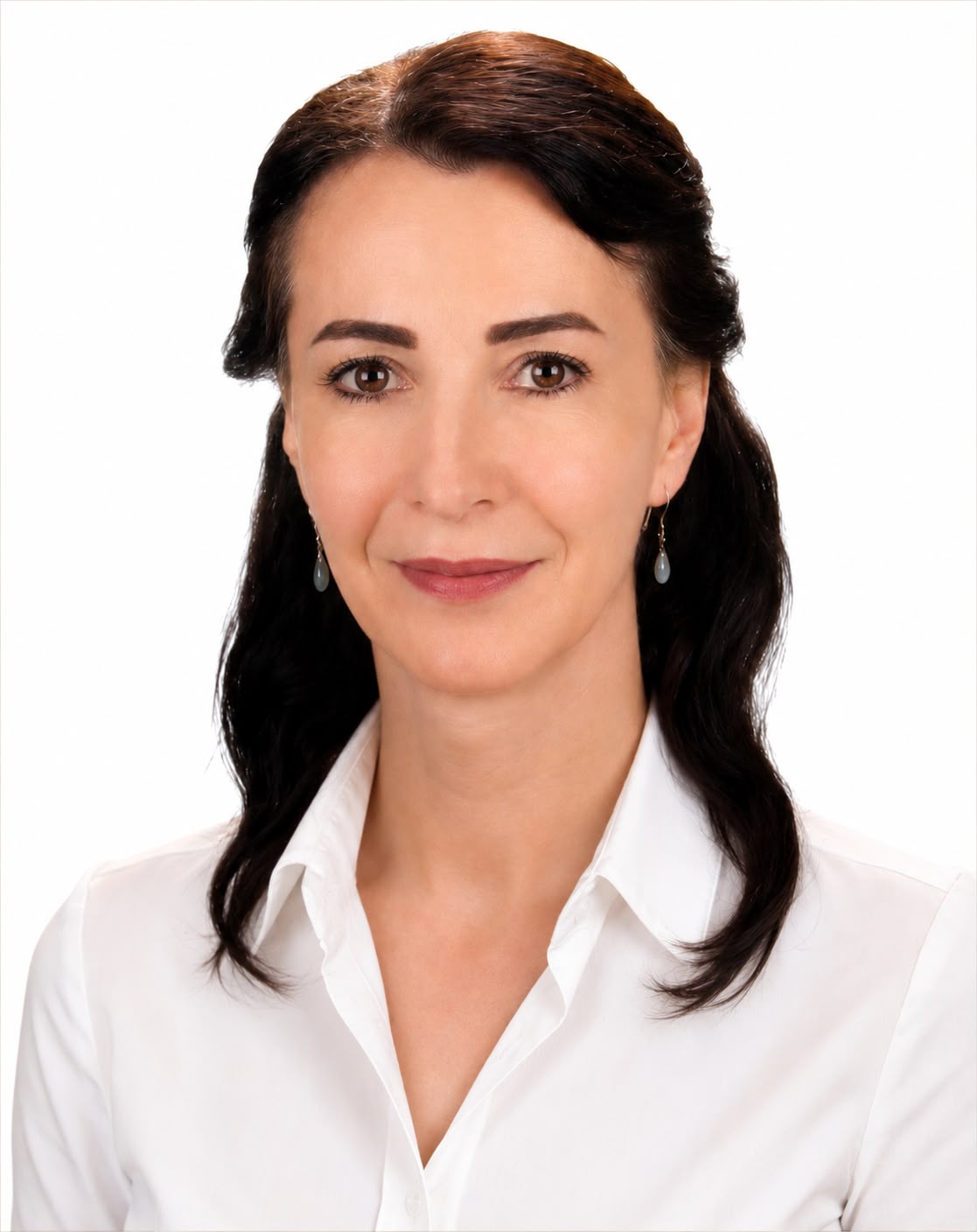
Dr. Sania El-HUSSEINI
Dr. Sania Faisal El-Husseini is a Professor of Political Science and International Relations at the Arab-American University in Palestine, and a writer and researcher who has published numerous political articles and research papers. El-Husseini worked with the Palestinian National Authority for more than two decades in information and diplomatic roles. She has worked as a lecturer in several universities in Palestine since 2008, such as Birzeit University and Al-Quds University. She was invited as an academic visitor by the Oxford Centre for Islamic Studies in 2013-2014, and Georgetown University in 2017-2018. Recently El-Husseini became a faculty member of the Department of Conflict Resolutions and Department of Diplomatic and International Law at the Arab-American University.