
Introduction
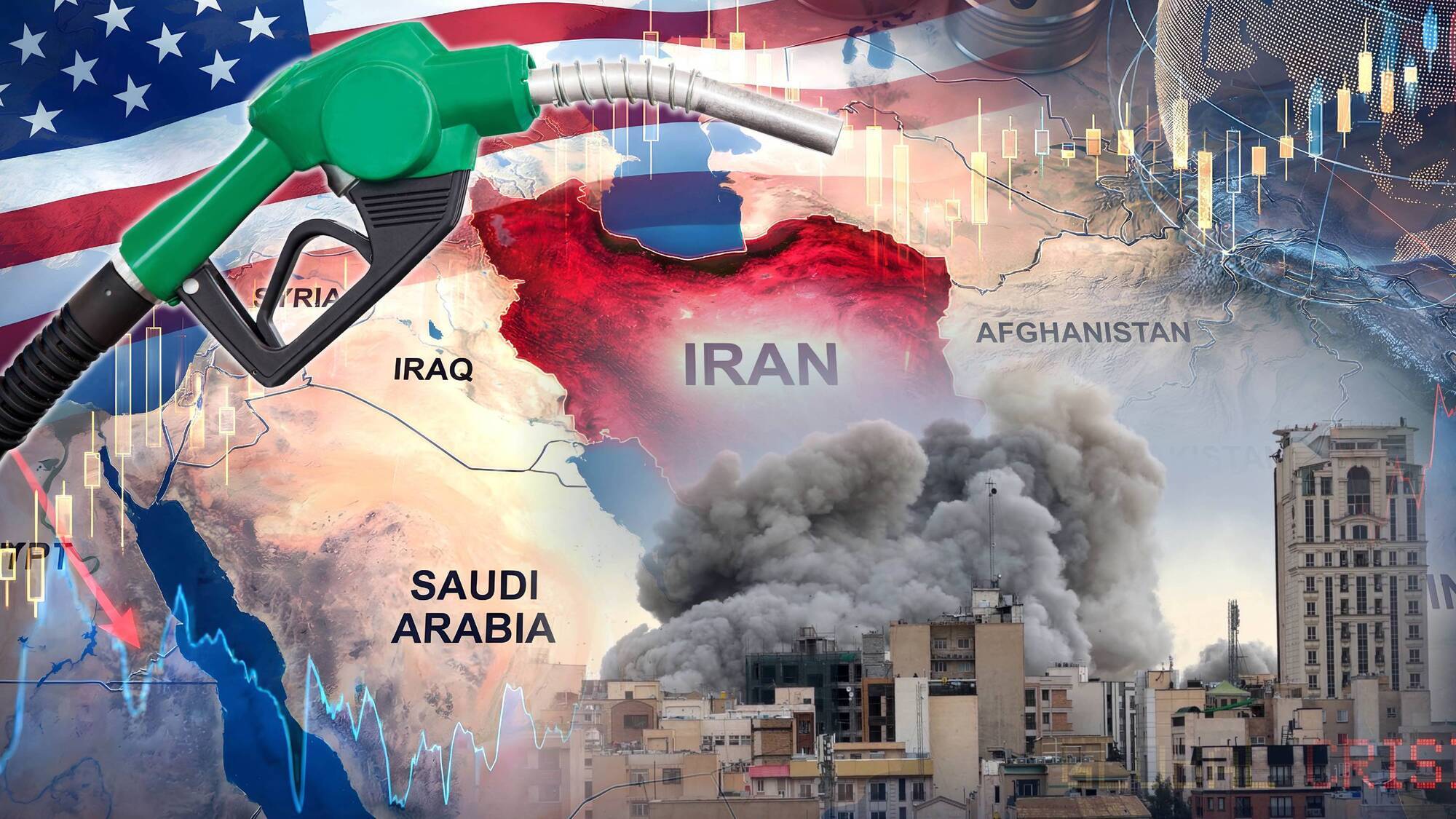
Recent developments in the Middle East indicate a transformation too profound and multilayered to be analysed solely through the lens of regional security. Rising tensions between Iran and the US-Israel axis signal the emergence of a new era in which the relationship between energy security and military strategy is being fundamentally redefined. As emphasized in Reuters’ 2026 analysis, the Hormuz-centered tensions represent not merely a diplomatic crisis, but a direct systemic risk to global energy supply chains (Reuters, 2026).
The issue at stake today is not limited to Iran’s military capabilities or Israel’s security strategy. The real concern lies in the increasing fragility of the energy transit routes that sustain the continuity of the global economic system. Therefore, every crisis surrounding the Strait of Hormuz directly affects not only Gulf countries but also a vast economic geography stretching from Europe to China.
According to the International Energy Agency, nearly one-quarter of global oil trade passes through the Strait of Hormuz (IEA, 2025). This transforms the Strait from a mere geographical passageway into one of the strategic choke points of the global system. Consequently, even a disruption lasting only a few days can trigger sharp increases in energy prices and intensify global inflationary pressures.
The Geopoliticization of Energy Corridors
In the early decades of the 21st century, wars were largely understood in terms of direct military interventions and ground occupations. Today, however, the centre of geopolitical competition has shifted toward the control of energy corridors. This transformation demonstrates that classical geopolitical understandings are being reshaped.
For instance, during the Iraq War in 2003, the United States’ primary strategy was based on direct territorial control. Operations involving hundreds of thousands of troops aimed to establish physical dominance over strategic areas (Belasco, 2009). Today, a very different strategic approach is visible in the same region. Modern power projection is no longer measured solely by territorial occupation but by the ability to manage and direct energy flows.
Thus, every tension in the Strait of Hormuz reflects a new form of global power competition. Not only the existence of oil reserves, but also the routes through which oil is transported and the security conditions surrounding those routes, have become strategically significant.
As highlighted in The Guardian’s May 2026 report, recent tensions have pushed oil markets “toward the red zone” (The Guardian, 2026). This statement clearly illustrates how sensitive the relationship between energy security and global economic stability has become.
The Transformation of US Military Strategy
The United States’ military approach in the Middle East has undergone a significant transformation in recent years. The enormous costs of the Iraq and Afghanistan wars pushed Washington toward lower-visibility but more effective strategic models (McInnis, 2021).
Today, the US strategy in the region is largely shaped through: control of maritime routes, air superiority, intelligence networks, cyber capabilities and special operations forces.
Military bases such as Al Udeid Air Base and Fifth Fleet Headquarters constitute key components of the US’s new strategic architecture centred on energy security. According to Cordesman (2020), the United States is shifting from a model of “maximum military visibility” toward one of “maximum operational access”.
This transformation does not simply signify a reduction in troop numbers. On the contrary, it represents the emergence of a technology-centred security model capable of generating broader influence with fewer troops. Unmanned aerial vehicles, missile defence systems, and satellite-supported intelligence networks now enable the United States to maintain regional influence without large-scale visible deployments.
Therefore, the US presence in the Middle East today should not be interpreted as “declining power”, but rather as “recalibrated power”.
Iran’s Doctrine of Asymmetric Power
Iran’s strategic model, on the other hand, relies less on conventional military capability and more on asymmetric pressure mechanisms. Aware of the high costs of direct confrontation with the United States, Tehran increasingly seeks influence through proxy actors, maritime pressure, and strategic control over energy corridors.
In this context, Hezbollah, the Houthis, and militia structures operating across Iraq and Syria have become essential components of Iran’s regional strategy. Attacks in the Red Sea, for example, represent not only regional security threats but also major risks to global trade.
What is particularly striking is that modern Middle Eastern politics is no longer shaped exclusively by states; non-state actors have also gained the capacity to influence the global economy.
Indeed, while John J. Mearsheimer’s theory of offensive realism argues that great powers seek maximum control over strategic spaces (Mearsheimer, 2001), today’s Middle East demonstrates that such competition is no longer conducted solely through conventional armies.
The Silent Concerns of China and Europe
One of the global actors most affected by the energy crisis in the Middle East is undoubtedly China. Due to its heavy dependence on Gulf energy imports, Beijing perceives any prolonged crisis in the Strait of Hormuz not merely as a diplomatic challenge but as a direct economic security issue.
However, China’s approach differs significantly from that of the United States. Beijing relies more heavily on economic influence, infrastructure investments, and diplomatic balancing strategies. This suggests that future US-China competition in the Middle East may increasingly revolve around energy security.
Similarly, for Europe, the issue extends beyond rising oil prices. Following the Russia-Ukraine War, European economies have become increasingly vulnerable to energy supply security risks. Consequently, every new crisis in the Middle East raises the possibility of a second major energy shock.
A New Balance of Power: Hybrid, Fragmented, and Multilayered
The current balance of power in the Middle East differs greatly from the bipolar and clearly defined structures of the Cold War era. The region has evolved into a fragmented and hybrid arena of competition involving multiple actors simultaneously.
The United States, Iran, Russia, China, Gulf states, and non-state armed groups all exert influence over the regional equation.
This development is also transforming the concept of power in international relations. The military-centered understanding of power defined within Kenneth Waltz’s structural realism framework (Waltz, 1979) is increasingly being replaced by more complex parameters such as: controlling energy routes, disrupting supply chains, creating economic vulnerabilities, managing cyberspace and exerting pressure through proxy actors.
Thus, the contemporary struggle in the Middle East is no longer merely a race of tanks or troop numbers. The real struggle concerns the ability to create disruption at critical points of the global system.
Conclusion: The New Wars Will Be Fought Over Energy Flows
The ongoing struggle in the Middle East cannot simply be described as a “war for oil.” The real battle concerns the ability to control the circulation of oil and natural gas within the global system.
For this reason, the Strait of Hormuz is not merely a maritime passageway; it is a strategic centre representing the fragility of the global economic order.
The restructuring of US military strategy and Iran’s increasing asymmetric pressure capabilities indicate that new energy-security-centred crises are likely to emerge in the coming years. Yet the most critical issue is the transformation of warfare itself.
Future wars will no longer be fought solely over borders; they will be fought to control energy flows, trade routes, and the rhythm of the global economy. And in the modern world, the closure of a strait may sometimes produce greater consequences than the advance of an army.

Dr. Hande ORTAY
REFERENCES
- Belasco, A. (2009). The cost of Iraq, Afghanistan, and other global war on terror operations since 9/11. Congressional Research Service.
- Cordesman, A. H. (2020). The changing US military presence in the Middle East. CSIS.
- International Energy Agency (2025). World Energy Outlook 2025. IEA.
- International Institute for Strategic Studies (2023). The military balance 2023. Routledge.
- Mearsheimer, J. J. (2001). The tragedy of great power politics. W.W. Norton.
- McInnis, K. J. (2021). Global posture review. Congressional Research Service.
- Reuters (2026). No deal, no exit: How US-Iran tensions threaten energy markets.
- The Guardian (2026). Oil markets nearing “red zone” amid Hormuz tensions.
- Waltz, K. N. (1979). Theory of international politics. McGraw-Hill.