
As the first quarter of the twenty-first century draws to a close, the international system is undergoing an unprecedented transformation. Following the end of the Cold War, a unipolar order emerged under the leadership of the United States, shaping the contours of global politics for decades. However, recent developments indicate that this structure is gradually eroding and giving way to a more complex, multi-actor, and competitive international environment. The Russia–Ukraine War, escalating tensions between the United States and China over Taiwan, security crises in the Red Sea, intensifying influence struggles across Africa, and, most recently, the growing tensions between Iran and Israel all serve as clear indicators that the international system has entered a new era of power competition.
Contemporary world politics is no longer defined solely by traditional interstate rivalry. Energy security, technological competition, artificial intelligence, struggles over critical minerals, food security, and the control of global supply chains have emerged as new parameters of power politics. Consequently, understanding international relations today requires more than an examination of military balances. Economic capacity, technological superiority, diplomatic influence, and strategic geography have become just as decisive as military power in shaping global affairs.
One of the most significant developments capturing international attention in recent months has been the escalating tension between Iran and Israel. The Middle East has historically been one of the central arenas of global power competition. Yet current developments demonstrate that regional conflicts now possess the potential to generate far-reaching global consequences. A direct confrontation between Iran and Israel would not merely concern the two states involved; it would have profound implications for the Gulf countries, global energy markets, European economies, Asia’s energy security, and international trade routes.
In this context, the strategic importance of the Strait of Hormuz has once again come to the forefront. As a narrow maritime passage through which a substantial portion of global oil trade flows, the Strait represents one of the vital arteries of the world economy. Any military escalation in the region could trigger sharp increases in oil and natural gas prices. Such developments would affect not only energy-importing countries but also global inflation rates, production costs, and international trade volumes. Indeed, every major regional crisis in recent years has highlighted the vulnerability of global energy markets.
Moreover, in today’s world, energy is not merely an economic commodity; it is also a geopolitical instrument of power. The transformation of Europe’s energy policies following the Russia–Ukraine War provides a striking example of this reality. As the European Union seeks to reduce its dependence on Russian energy resources, it has increasingly turned toward alternative energy corridors. This shift has further enhanced Türkiye’s strategic significance. Situated at the crossroads of the Caspian Basin, Central Asia, the Middle East, and the Eastern Mediterranean, Türkiye occupies a critical position in facilitating the transportation of energy resources to European markets.
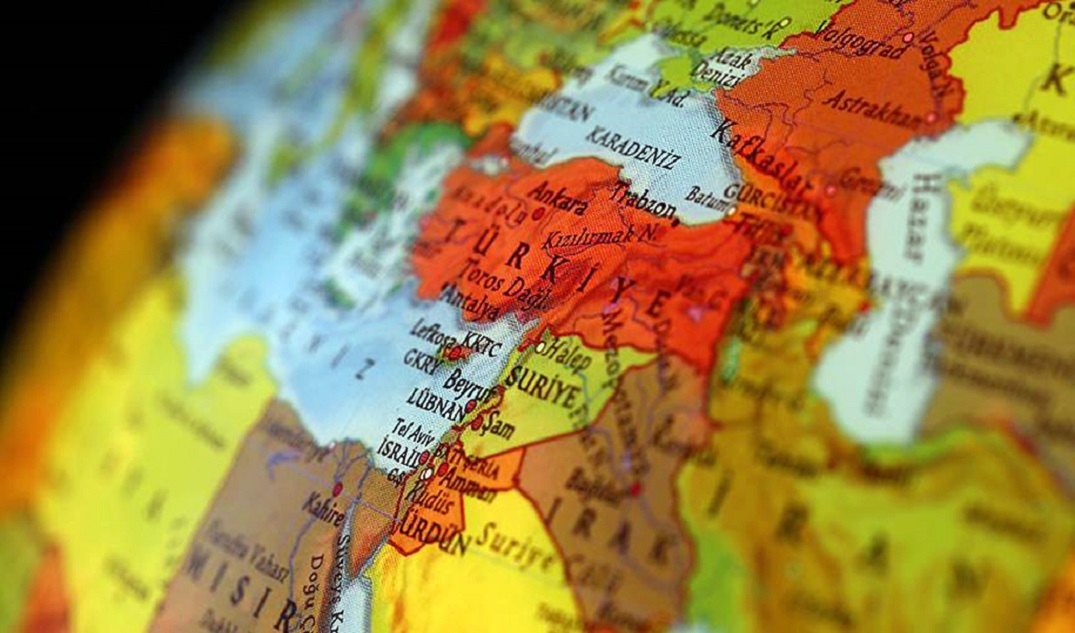
At this juncture, Türkiye’s geopolitical value deserves renewed attention. Türkiye is not merely a country located at the intersection of three continents. It is also a multidimensional actor positioned at the centre of strategically important regions, including the Black Sea, the Caucasus, the Balkans, the Eastern Mediterranean, and the Middle East. Every major transformation within the international system affects Türkiye’s security, economy, and foreign policy either directly or indirectly.
One of the most notable developments in Turkish foreign policy in recent years has been the strengthening of a multidimensional diplomatic approach. While maintaining its membership in NATO, Ankara continues its cooperation with Russia in the fields of energy and security, strengthens its ties with Central Asia through the Organisation of Turkic States, and expands its diplomatic presence across Africa within the framework of its Africa Opening Policy. This approach can be interpreted as a reflection of a new international environment in which rigid bloc politics is increasingly being replaced by more flexible and pragmatic forms of engagement.
In today’s emerging multipolar order, states are increasingly reluctant to align exclusively with a single centre of power. Instead, they seek to develop simultaneous relationships with multiple actors. Türkiye represents one of the most prominent examples of this trend. However, such a strategy also entails significant responsibilities and risks. Balancing relations among competing power centres requires careful, long-term strategic planning within an increasingly complex international environment.
Furthermore, global power competition is no longer confined to states alone. Technological transformation, the artificial intelligence revolution, and digitalisation are reshaping the future of international politics. The growing competition between the United States and China in artificial intelligence is likely to determine which actors will possess economic and military superiority in the coming decades. Consequently, technology policies have become an integral component of national security strategies.
In this process, Türkiye cannot rely solely on its geopolitical advantages. Enhancing technological capacity, expanding the defence industry’s achievements into broader high-technology sectors, strengthening university-industry cooperation, and investing in human capital have become strategic necessities. In the contemporary era, the measure of a powerful state is not merely military capability but also the capacity to generate knowledge, foster innovation, and lead technological transformation.
At the same time, transformations within the global system have given rise to new understandings of security. Security can no longer be understood solely in terms of territorial defence. Energy security, cybersecurity, food security, health security, and climate security have all become fundamental components of national security policies. In particular, climate change-induced challenges such as drought, migration flows, and competition over natural resources are likely to emerge as some of the most significant issues in international politics in the coming years.
Taken together, these developments suggest that the international system is approaching a new historical turning point. Global power balances are being reshaped, the importance of regional actors is increasing, and the fundamental parameters of international relations are evolving. In this environment, Türkiye is presented with significant opportunities due to its strategic location, diplomatic capabilities, and regional influence.
However, realising these opportunities requires the strengthening of a long-term strategic vision. Consolidating Türkiye’s role as an energy corridor, transforming defence industry achievements into a broader technological ecosystem, enhancing economic resilience, and strengthening its capacity as a mediator in regional crises are all essential priorities for the future.
In conclusion, the current era is not merely an age of uncertainty; it is also an age of transformation characterised by the emergence of new centres of power. As global turbulence intensifies, the strategic path chosen by Türkiye will shape not only its own future but also the security and stability of the wider region in which it is situated. In a period marked by the resurgence of geopolitics, intensifying power competition, and the restructuring of the international order, it is more important than ever for Türkiye to pursue an active, multidimensional, and visionary foreign policy.

Dr. Hande ORTAY
REFERENCES
- International Energy Agency (2024). World Energy Outlook 2024. Paris: IEA.
- International Monetary Fund (2024). World Economic Outlook: Navigating Global Divergences. Washington, DC: IMF.
- NATO (2024). NATO Strategic Concept and Security Environment Assessment. Brussels: NATO Public Diplomacy Division.
- United Nations (2024). World Economic Situation and Prospects 2024. New York: United Nations.
- World Bank (2024). Global Economic Prospects. Washington, DC: World Bank.
- European Commission (2024). REPowerEU: Joint European Action for More Affordable, Secure and Sustainable Energy. Brussels: European Commission.
- Mearsheimer, John J. (2014). The Tragedy of Great Power Politics. New York: W.W. Norton & Company.
- Waltz, Kenneth N. (1979). Theory of International Politics. Reading, MA: Addison-Wesley.
- Brzezinski, Zbigniew (1997). The Grand Chessboard: American Primacy and Its Geostrategic Imperatives. New York: Basic Books.
- Kaplan, Robert D. (2012). The Revenge of Geography: What the Map Tells Us About Coming Conflicts and the Battle Against Fate. New York: Random House.
- Stockholm International Peace Research Institute (2024). SIPRI Yearbook 2024: Armaments, Disarmament and International Security. Oxford: Oxford University Press.
- Munich Security Conference (2025). Munich Security Report 2025: Multipolarization. Munich: MSC.
- Organization of Turkic States (2024). Vision of the Turkic World 2040. Istanbul: OTS Secretariat.
- Ministry of Foreign Affairs of the Republic of Türkiye (2024). Turkish Foreign Policy in a Changing International System. Ankara: MFA Publications.