
Introduction
Türkiye’s investment fund crisis has developed into one of the most significant financial and political challenges facing the country in the second half of 2026. What initially appeared to be a liquidity problem involving several investment funds has evolved into a broader debate about financial market supervision, investor protection, institutional accountability, and public confidence in the country’s capital markets.
The crisis became particularly visible in September 2026, when several investment funds struggled to meet investors’ redemption requests. Subsequent regulatory decisions, the liquidation of 131 investment funds, and a widening judicial investigation brought the issue to national attention. According to figures released by the Capital Markets Board (Sermaye Piyasası Kurulu – SPK), approximately 455,758 individual investors were affected by the liquidation process.¹
The developments have also attracted considerable international attention. As the government attempts to manage the financial consequences, establish a framework for investor repayments, and maintain confidence in Türkiye’s financial system, the issue has increasingly become a political challenge for the government.
This article examines the crisis’ background, the regulatory and judicial developments, the government’s response, and the potential implications for Türkiye’s economy and political environment. It does not seek to assign individual responsibility or draw conclusions about allegations that remain under investigation.
1. How Did the Crisis Emerge?
Investment funds are financial instruments through which investors pool their resources and invest in assets such as equities, government bonds, deposits, and other financial instruments. In Türkiye, the investment fund industry expanded considerably in recent years, partly because households sought alternative ways of protecting their savings against inflation and currency depreciation.
The sector’s growth also coincided with increased participation in the stock market and the expansion of alternative investment products. Some funds achieved exceptionally high reported returns, attracting substantial investor interest and significant capital inflows.
However, questions subsequently emerged regarding the concentration of certain funds in relatively illiquid, small-capitalization stocks. Such securities can be harder to sell in large quantities without affecting market prices. Consequently, funds with substantial positions in these assets may face difficulties meeting redemption requests when a large number of investors simultaneously seek to withdraw their money.²
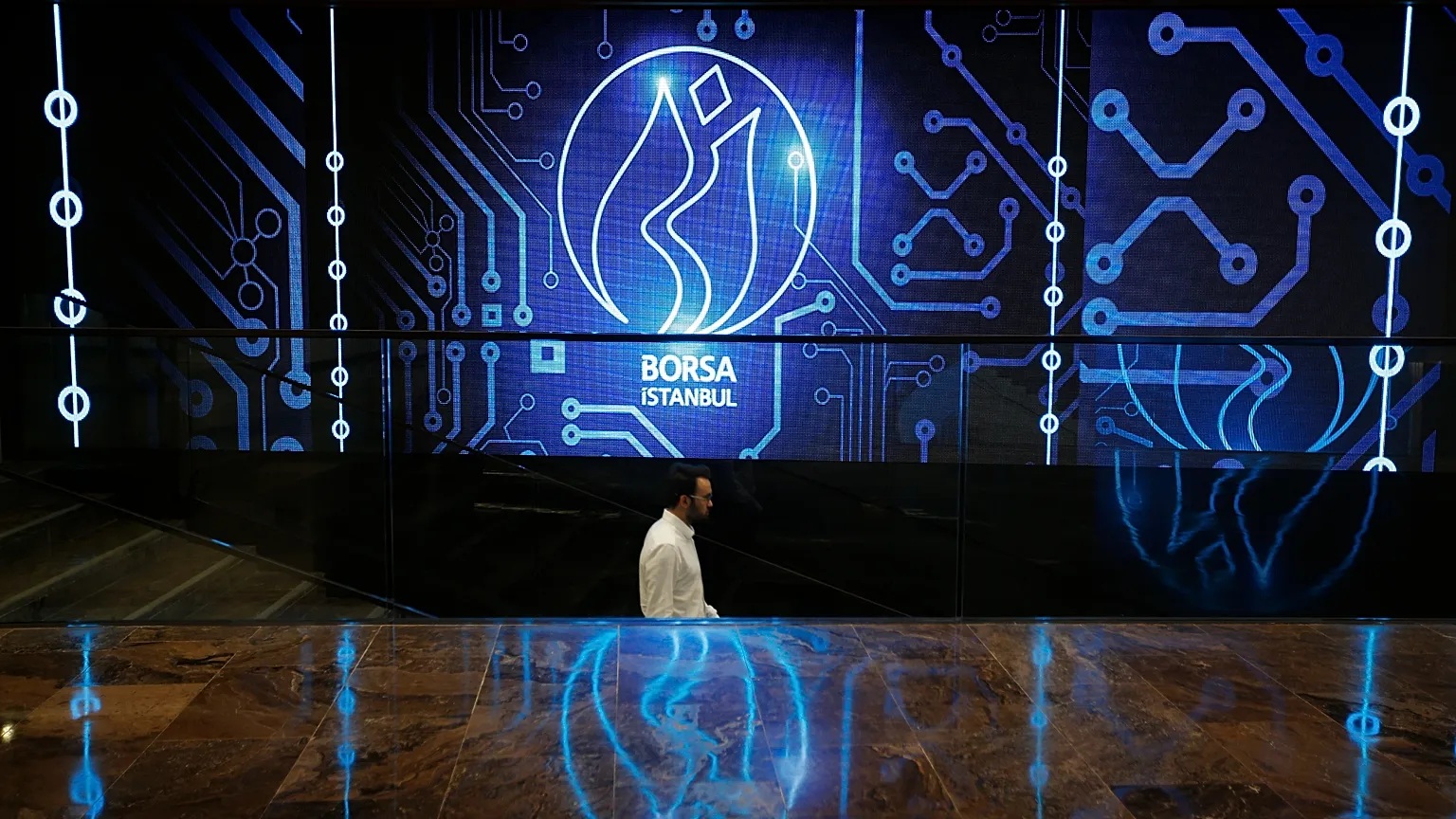
This issue became increasingly visible during September 2026. After Pusula Portföy and Tera Portföy struggled to meet certain payment obligations, concerns spread across the investment fund industry. The situation also affected the wider stock market. Investors worried that funds facing liquidity difficulties might be forced to sell large quantities of shares. The resulting uncertainty contributed to significant selling pressure on Borsa İstanbul, particularly on 15 and 16 September.³
The crisis therefore involved several interconnected dimensions: liquidity management, portfolio concentration, the valuation of financial assets, investor redemption rights, and the regulatory framework governing investment funds. It is important to distinguish these observable financial developments from allegations of possible market manipulation. The latter remain matters for the relevant regulatory and judicial authorities.
2. The Regulatory Intervention
On 17 September 2026, the Capital Markets Board (SPK) announced a major intervention involving seven portfolio management companies: Tera Portföy, Pusula Portföy, Hedef Portföy, Atlas Portföy, A1 Portföy, Pardus Portföy and Bulls Portföy. The SPK suspended transactions involving the relevant funds on the Turkish Electronic Fund Trading Platform (TEFAS) and initiated the liquidation of 131 investment funds. The decision represented an extraordinary regulatory response to the problems affecting the sector.⁴
The scale of the situation became clearer when the regulator disclosed how many investors were affected. According to figures reported by Reuters on 23 September, 455,758 individual investors held positions in the funds concerned, whose combined assets were valued at approximately $18 billion at the time of the initial intervention.⁵ The authorities also introduced measures intended to limit the potential impact on the wider financial system. The government and financial regulators addressed liquidity conditions, while the Central Bank of the Republic of Türkiye announced additional liquidity management measures.
The intervention mattered because it showed the issue had moved beyond the operational difficulties of individual investment funds and become a broader financial stability concern. Nevertheless, the liquidation process created a new challenge: determining how investors would recover their money, how the funds’ assets would be valued, and how any potential losses would be distributed.
3. The Judicial Investigation and Political Implications
Alongside the regulatory response, judicial authorities initiated an investigation into transactions involving certain companies and investment funds. The investigation reportedly examines allegations concerning market manipulation, insider trading, financial transactions, and the possible use of investment funds in coordinated market activities.
Several individuals have been detained or arrested during the investigation. These developments have drawn particular attention because the investigation has expanded beyond financial market professionals to include figures connected to the political and administrative establishment. One of the most prominent developments occurred in November 2026, when former family and social affairs minister Fatma Betül Sayan Kaya was arrested in connection with the expanding investigation. According to the Associated Press, the allegations relate to suspected involvement in a share-price manipulation investigation. Kaya has denied wrongdoing, and the allegations have not been established through a final judicial ruling.⁶
The investigation has also drawn attention to senior financial regulatory officials. According to the Financial Times, Banking Regulation and Supervision Agency (BDDK) Chairman Şahap Kavcıoğlu offered to resign amid the growing controversy. The newspaper reported that he had not been publicly identified as a suspect and that it remained unclear whether his resignation offer would be accepted. The same report referred to the detention of three senior BDDK officials, one of whom was reportedly remanded in custody on suspicion of bribery.⁷
These developments have increased the political sensitivity of the crisis. However, the legal distinction between allegations, investigative measures, detention, arrest, and proven criminal responsibility remains essential. The investigation is ongoing, and its ultimate findings will depend on the evidence the competent judicial authorities evaluate.
4. The Government’s Response and Investor Compensation
The government’s response has increasingly focused on two objectives: containing the financial impact and establishing a mechanism through which affected investors can recover their funds. An important legislative step was taken on 22 October 2026, when the Turkish Parliament adopted Law No. 7596 concerning certain investment funds ordered into liquidation. The law was subsequently published in the Official Gazette (Resmi Gazete) on 27 October.⁸
The legislation established a framework for liquidating the affected funds, recovering assets, and distributing available resources among investors. It also introduced arrangements for interim payments, prioritizing the protection of smaller investors. Under the relevant framework, eligible investors can receive interim payments subject to the applicable calculation methods and a maximum threshold of one million Turkish lira.
The SPK subsequently published its implementation procedures on 27 October, clarifying arrangements for administering the funds, the institutions responsible for liquidation, and the distribution of interim and final payments.⁹
The government has also sought to clarify the process’ financial dimension. On 5 November, Treasury and Finance Minister Mehmet Şimşek announced that approximately 130.2 billion Turkish lira, equivalent to around $2.6 billion, had been paid to 420,031 investors across 108 investment funds undergoing liquidation. According to the minister, 179,449 investors had recovered their entire net investments. He also said the repayments were being financed through the funds’ assets, recovery accounts and voluntary restitution accounts, rather than the public budget.¹⁰
These figures indicate that the repayment process has made substantial progress. Nevertheless, the final financial outcome depends on the completion of liquidation procedures, the realizable value of the remaining assets, and the outcome of ongoing recovery efforts. The distinction between the number of investors who have received payments and the total number of investors initially affected is particularly important when assessing the overall situation.
5. Economic and Political Consequences
The investment fund crisis has implications extending beyond the investors directly involved. First, it has raised questions about confidence in Türkiye’s capital markets. Investment funds depend heavily on the credibility of asset valuations, transparency, and investors’ ability to access their money under established procedures. Any prolonged uncertainty in these areas can influence investment decisions.
Second, the crisis has created an additional challenge for Türkiye’s efforts to attract international capital. As the country seeks foreign investment and works to strengthen its macroeconomic credibility, developments involving major financial institutions and regulatory authorities can attract increased scrutiny from international investors.
Third, the political implications are becoming more visible. The involvement of individuals with political connections, the expansion of judicial investigations and the reported resignation offer by a senior financial regulator have made it increasingly difficult for the government to treat the issue as exclusively a technical matter concerning financial markets.
The government must therefore address several expectations simultaneously: protecting investors, ensuring transparency in the liquidation process, maintaining financial stability, and demonstrating that allegations are being investigated through appropriate legal procedures.
The crisis also presents an institutional challenge. The effectiveness of financial regulation depends not only on intervention after problems emerge but also on the capacity to identify potential risks early. The experience may therefore encourage a broader discussion about portfolio concentration limits, liquidity requirements, valuation practices, disclosure obligations and supervisory coordination. It would nevertheless be premature to draw definitive conclusions about the overall performance of the regulatory system before the relevant investigations and reviews are complete.
Conclusion
Türkiye’s investment fund crisis has evolved from a problem involving liquidity and redemption difficulties into a broader financial, institutional and political challenge. The liquidation of 131 investment funds, the involvement of approximately 456,000 investors, the introduction of a new legislative framework and the expanding judicial investigation illustrate the complexity of the situation.
Turkish government has taken steps to address the immediate financial consequences, and the repayment figures announced in November indicate considerable progress in providing investors with access to their funds. However, the ultimate outcome will depend on the completion of liquidation procedures, the recovery of assets, the treatment of outstanding claims and the findings of the judicial investigation. So far, Turkish President Recep Tayyip Erdoğan has sent a clear message to international markets about the government’s decisiveness in seeing the process through to completion without hesitation.
Politically, the crisis tests the government’s institutional credibility. How it is handled may shape perceptions of financial regulation, investor protection, and public accountability. For Türkiye, the central issue is therefore not simply how to resolve the immediate difficulties experienced by a group of investment funds. It is also how to restore confidence in the country’s capital markets and ensure that the institutional framework can effectively manage similar risks in the future. At this stage, the most appropriate assessment is that the crisis remains an evolving process. Its full economic, legal and political consequences will become clearer as the liquidation procedures advance and the judicial authorities complete their investigations.

Prof. Dr. Ozan ÖRMECİ
REFERENCES
- Reuters (2026), “Turkey says nearly half a million investors affected by funds liquidation”, 23 September 2026, Investing.com / Reuters.
- Reuters (2026), “How Turkey’s investment fund bubble burst”, 2 October 2026, Reuters.
- Ekonomim (2026), “Türkiye’de fon krizi nasıl başladı, nereye gidiyor?”, 17 September 2026, Ekonomim.
- Capital Markets Board of Türkiye (SPK), decisions concerning the liquidation of investment funds, 17 September 2026; see also the subsequent regulatory announcements.
- Reuters (2026), “Turkey says nearly half a million investors affected by funds liquidation”, 23 September 2026, Reuters.
- Associated Press (2026), “Turkey arrests ex-minister as part of a widening fund manipulation scandal”, November 2026, AP News.
- Financial Times (2026), “Turkey’s chief banking regulator offers to resign over $20bn fraud scandal”, November 2026, Financial Times.
- Republic of Türkiye, Law No. 7596, “Law on Certain Investment Funds Ordered into Liquidation”, adopted 22 October 2026 and published in the Official Gazette, No. 33413, 27 October 2026.
- Capital Markets Board of Türkiye (SPK) (2026), “Press Announcement: Procedures and Principles Regarding Liquidation and Payments”, 27 October 2026, SPK.
- Anadolu Agency (2026), “Türkiye repays $2.6B to over 420,000 investors as fund liquidations proceed”, 5 November 2026, Anadolu Agency.