

Introduction
Turkey’s political landscape is undergoing a transformation far too complex to be understood solely through the narrow lens of domestic political competition. To comprehend the current political climate, it is no longer sufficient to focus exclusively on inter-party rivalry, electoral calculations, or daily political controversies. Politics in Turkey is now shaped at the intersection of economics, law, foreign policy, security, social psychology, and global power competition. Consequently, contemporary political developments should be interpreted as reflections of a broader structural transformation rather than isolated events.
In recent years, the Turkish political agenda has been dominated by debates within the opposition, judicial decisions, economic pressures, constitutional reform discussions, multidimensional foreign-policy balancing, and questions about public trust. While each of these issues is significant in its own right, the more fundamental reality lies in their interconnectedness. Rather than operating independently, these dynamics continuously influence and reshape one another. Politics in Turkey has become too complex to be reduced to a simple government-opposition dichotomy and too intertwined with the international system to be explained solely through domestic factors.
The fundamental question facing Turkey today is this: as the global order undergoes a profound restructuring, will Turkey advance by strengthening its democratic legitimacy, economic resilience, and institutional capacity, or will it attempt to adapt to the emerging international system under the shadow of political tensions, social polarisation, and institutional erosion?
This is not merely a question for political actors. It is a historical challenge that requires reflection from academia, the media, civil society, and citizens alike.
Legitimacy, Institutions, and the Opposition’s Crisis of Transformation
Recent developments within Turkey’s opposition cannot be viewed simply as internal leadership disputes. When tensions within the main opposition party intersect with judicial interventions, they generate broader debates regarding the institutional foundations of political competition in Turkey. In modern democracies, political parties are not merely organisations that participate in elections; they are institutional mechanisms through which diverse societal demands are translated into the political system. Therefore, crises surrounding party governance, congress processes, and leadership transitions directly affect the quality of democratic representation.
The opposition’s current predicament should be analysed on two levels. First, there is the issue of internal democracy, leadership renewal, institutional reform, and organisational transformation. Second, there is a broader debate concerning the influence of judicial decisions on political competition. If large segments of society come to believe that political outcomes are shaped not by natural democratic competition but by legal interventions, trust in the entire political system may be undermined rather than confidence in a single political party.
What deserves particular attention is that the opposition is being tested not only in its challenge to the government but also in its own institutional maturity. The fundamental challenge facing Turkey’s opposition is not merely to present itself as an alternative to the ruling establishment; it is to offer a credible, sustainable, inclusive, and institutionally grounded vision of governance. Voters do not make decisions solely on the basis of governmental shortcomings. They also evaluate the opposition’s governing capacity, crisis management skills, and institutional reflexes.
For this reason, the opposition’s principal task is not to construct a political narrative based solely on grievances. Rather, it must articulate a compelling vision grounded in the rule of law, economic justice, meritocracy, social cohesion, and a coherent foreign policy strategy. In a society such as Turkey—characterised by a strong political memory, extensive experience of crises, and heightened security sensitivities—politics based solely on objection is unlikely to succeed in the long term. Criticism must be accompanied by persuasion, protest by policy proposals, and opposition by institutional alternatives.
The Economy: The Silent Yet Decisive Centre of Politics
Although political debates often dominate headlines, the economy remains the most decisive factor shaping everyday life. Inflation, declining purchasing power, income inequality, housing affordability challenges, youth unemployment, and the erosion of the middle class constitute the true foundation of political reality. Economics is not merely a collection of technical indicators; it lies at the heart of social stability, political consent, and the relationship between the state and its citizens.
Contemporary economic debates in Turkey should therefore be examined not only through inflation, exchange, and interest rates but also through the lens of social justice and future expectations. Economic instability undermines not only present welfare but also hope for the future. For younger generations in particular, the central issue is not merely income levels but whether merit will be rewarded, opportunities will be fairly distributed, and meaningful futures can be built within their own country.
Credibility in economic governance cannot be achieved solely through numerical targets. It depends upon institutional consistency. Central bank policies, fiscal discipline, productive capacity, legal certainty, and the investment climate are deeply interconnected. When legal predictability weakens, economic confidence deteriorates. When political uncertainty increases, investment decisions are postponed. When social polarisation deepens, collective economic sacrifice becomes more difficult to achieve.
For this reason, Turkey’s economic challenge is simultaneously a governance challenge. The economy reflects not only market performance but also institutional strength. Strong institutions, transparent decision-making processes, and a predictable legal framework enable societies to manage economic crises effectively. However, when economic difficulties intersect with political tensions, the social costs of the crisis become substantially heavier.
Foreign Policy: Seeking Balance in a Multipolar World
Turkey’s foreign policy is being redefined under the pressures of an increasingly multipolar international system. The post–Cold War unipolar order has largely eroded, giving way to a more competitive and fluid environment shaped by the interactions of the United States, China, Russia, the European Union, and various regional powers. Within this evolving context, Turkey’s geopolitical position enables it to function not merely as a regional actor but as a strategic middle power connecting multiple zones of conflict and cooperation.
Turkey’s principal advantage lies in its geography. Its influence continues to expand across the Black Sea region, the Caucasus, the Middle East, the Eastern Mediterranean, the Balkans, and Africa. Yet geography alone does not generate power. It acquires significance only when combined with strategic vision, institutional capacity, and economic resilience. Consequently, Turkey’s effectiveness in foreign policy depends fundamentally upon strong domestic institutions, economic stability, and societal legitimacy.
Today, Turkey remains a member of NATO while simultaneously cultivating multidimensional relationships with Russia, China, Gulf states, African countries, and Central Asian partners. Although this approach occasionally provokes discussions regarding an alleged “axis shift”, the reality is that the nature of the contemporary international system increasingly compels states to pursue diversified partnerships. Rather than adhering rigidly to a single bloc, governments increasingly develop flexible alliances based upon specific interests and strategic priorities.
However, multidimensional diplomacy should not be confused with a lack of principles. Balancing strategies require strategic rationality, but such rationality must be supported by institutional consistency and values-based diplomacy. Turkey’s challenge is to safeguard its security interests while simultaneously positioning itself as a credible actor committed to international law, humanitarian diplomacy, and regional stability.
Conclusion: The Need for a New Political Mindset
Turkey stands at a crossroads defined by both extraordinary opportunities and significant risks. Its strategic geography, historical depth, youthful population, diplomatic capabilities, and advances in the defence industry provide substantial room for manoeuvre. Yet transforming these advantages into sustainable power requires strengthening the rule of law, economic justice, institutional meritocracy, and societal trust at home.
The current political moment demonstrates that Turkey’s greatest need is a long-term political vision capable of transcending daily crises. Such a vision must be inclusive rather than polarising, strategic rather than reactive, institutional rather than personalised, and historically grounded rather than driven by short-term calculations.
Politics is not merely a struggle for power. It is the art of constructing a shared future. When politics is reduced to power competition alone, societies become exhausted, institutions deteriorate, and confidence in the future weakens. Yet when politics is rebuilt upon the foundations of reason, law, justice, and vision, Turkey can strengthen its position both within its region and in the broader international system.
The essential choice facing Turkey today is therefore clear: to become a country governed by uncertainties or a country capable of governing uncertainty itself. My assessment is that Turkey’s historical experience, social dynamism, and geopolitical capacity provide the necessary foundations for the latter path. However, achieving this outcome requires rebuilding trust within political discourse, institutional governance, and state-society relations. In the twenty-first century, the most valuable strategic asset is not military power, economic size, or diplomatic flexibility. It is trust.
Where trust is absent, stability becomes fragile; where diplomacy is absent, power remains incomplete; and where the rule of law is absent, politics faces a crisis of legitimacy. It is precisely at this intersection that Turkey’s most significant challenge in the new century begins.
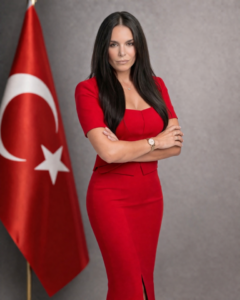
Dr. Hande ORTAY
REFERENCES
- Freedom House (2025). Freedom in the World 2025. Washington, DC: Freedom House.
- International Monetary Fund (2025). World Economic Outlook: Growth Amid Uncertainty. Washington, DC: IMF.
- Organisation for Economic Co-operation and Development (2025). OECD Economic Surveys: Türkiye 2025. Paris: OECD Publishing.
- World Bank (2025). Global Economic Prospects. Washington, DC: World Bank.
- NATO (2025). NATO Strategic Concepts and Security Assessments. Brussels: NATO Public Diplomacy Division.
- European Union (2024). European Union Foreign and Security Policy Report. Brussels: European Commission.
- Fukuyama, Francis (2014). Political Order and Political Decay: From the Industrial Revolution to the Globalization of Democracy. New York: Farrar, Straus and Giroux.
- North, Douglass C., Wallis, John Joseph, & Weingast, Barry R. (2009). Violence and Social Orders: A Conceptual Framework for Interpreting Recorded Human History. Cambridge: Cambridge University Press.
- Acemoglu, Daron., & Robinson, James A. (2012). Why Nations Fail: The Origins of Power, Prosperity, and Poverty. New York: Crown Business.
- Mearsheimer, John J. (2018). The Great Delusion: Liberal Dreams and International Realities. New Haven: Yale University Press.
- Waltz, Kenneth N. (1979). Theory of International Politics. Reading, MA: Addison-Wesley.
- Nye, Joseph S. (2004). Soft Power: The Means to Success in World Politics. New York: PublicAffairs.
- Castells, Manuel (2010). The Rise of the Network Society (2nd ed.). Oxford: Wiley-Blackwell.
- United Nations Development Programme (2024). Human Development Report 2024. New York: UNDP.