
Introduction
The international system is un
In this evolving international
Within this context, the conce
The Changing International Sys
In contemporary global politic
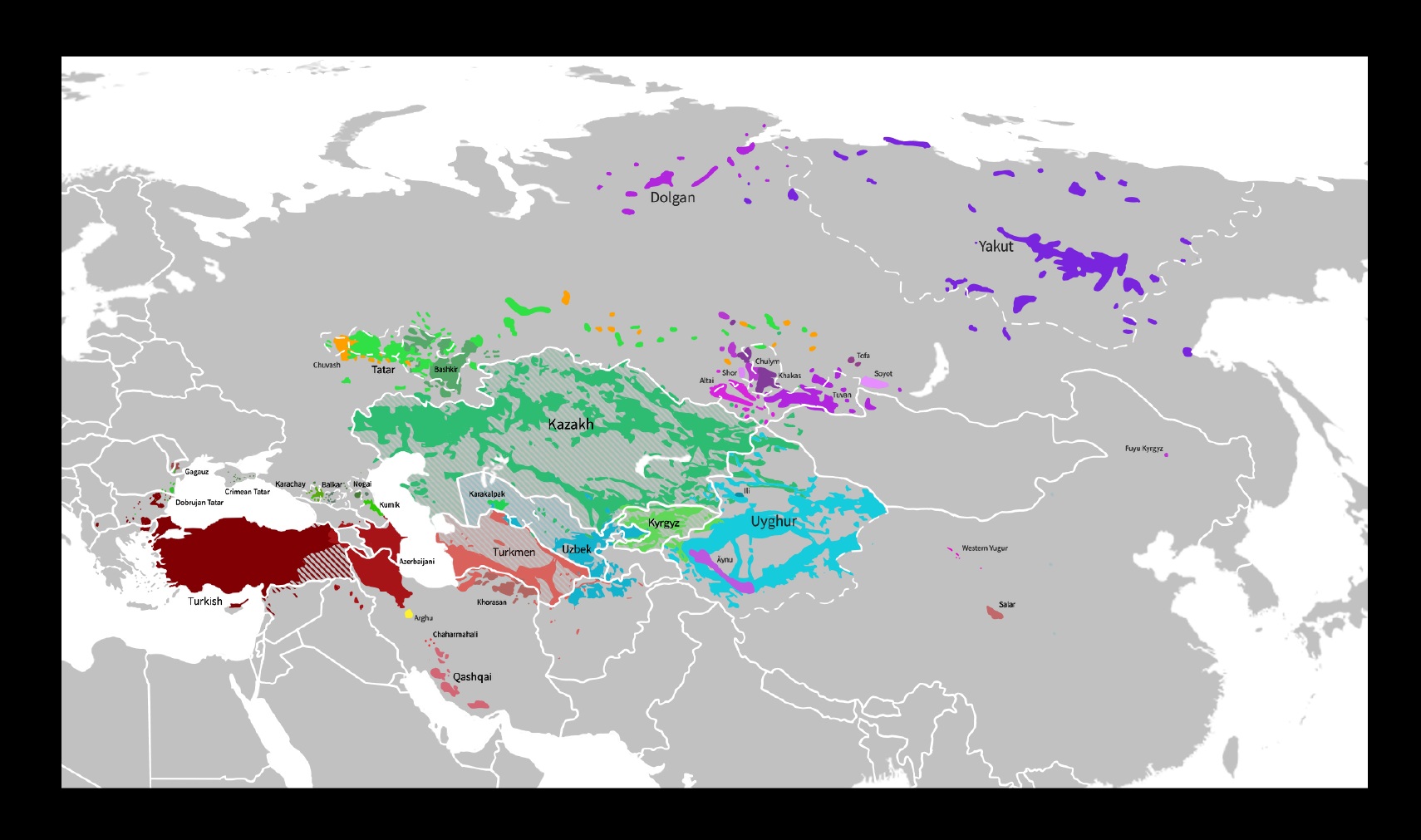
The Turkic states possess some of the world’s largest energy reserves, control critical transportation routes, and occupy strategic transit corridors that can shape trade flows between Europe and Asia. In particular, countries such as Azerbaijan, Kazakhstan, Turkmenistan, and Uzbekistan play increasingly significant roles in global energy security due to their abundant natural resources.
The vulnerabilities Europe has experienced in energy supply security following the Russia–Ukraine War have further increased the strategic importance of the Caspian Basin and Central Asian energy resources. Consequently, the Turkic World has begun to evolve beyond a purely cultural sphere of interaction and is increasingly becoming a significant actor within the global economic system.
When Turkey’s unique position as a bridge between Europe and Asia, Azerbaijan’s role as a key energy transit hub, and the vast natural resources of the Central Asian Turkic republics are considered collectively, it becomes evident that the geopolitical weight and strategic relevance of the Turkic World within the global balance of power continue to grow steadily.
The Organization of Turkic Sta
One of the most significant de
For many years, interactions a
From the perspective of international relations theory, this transformation is a contemporary example of regional integration. Just as the European Union evolved from an economic cooperation mechanism into a broader political and institutional structure, a similar, albeit distinct, trajectory is emerging within the Turkic World, shaped by its own historical, cultural, and geopolitical dynamics.
It is important to emphasize, however, that the primary objective is not the establishment of a supranational political union. Rather, the aim is to create a robust and sustainable sphere of cooperation based on shared interests, mutual benefit, and collective strategic objectives.
The Security Dimension and a C
The future of the Turkic
The Eurasian region inhabited by Turkic nations has historically been at the center of great-power competition and continues to hold
Conflicts in the Caucasus, border disputes in Central Asia, ethnic tensions, and various forms of regional instability constitute important components of the common security agenda of Turkic states. In particular, the new geopolitical realities that emerged following the Karabakh War have demonstrated that the security architecture of the South Caucasus is undergoing significant transformation. Similarly, i
Terrorism also represents one
Emerging Security Challenges a
In an era increasingly characterized by hybrid warfare, it is no longer possible for states to ensure their security solely through conventional military capabilities. Cybersecurity, information security, artificial intelligence-supported defense systems, and strategic communication tools have become fundamental components of contemporary security paradigms. Disinformation campaigns, digital manipulation activities, and information warfare represent emerging forms of threats capable of undermining domestic stability and influencing political and social processes within states. In this context, Turki
Energy security also occupies
Cooperation in the defense industry represents another significant instrument for enhancing the collective security capacity of the Turkic World. Recent
Furthermore, disaster management, humanitarian assistance operations, and crisis response mechanisms should be regarded as essential components of an expanded security framework. Joint response mechanisms developed to address natural disasters, pandemics, and humanitarian crises would strengthen solidarity among Turkic states while contributing to regional resilience and stability.
In conclusion, cooperation in
Science Diplomacy and the
In the contemporary internatio
For this reason, the rise of t
The Turkic World possesses considerable potential in the field of science diplomacy due to its young population, expanding higher education institutions, and growing research capacity. However, to effectively utilize this potential, it is necessary to establish join
The Turkic World should establish common research institutions, expand student exchange programs, create joint scientific funding mechanisms, and invest in strategic research projects. Additionally, the establishment of joint academic journals, the organization of international conferences, and the development of common data-sharing platforms among Turkic states would accelerate scientific integration. The institutionalization of scientific cooperation would not only increase the quantity of academic output but also enhance the international visibility, impact, and quality of scholarly research produced within the Turkic World.
Human Capital and the
Another crucial dimension of s
The relationships established through science diplomacy also provide a sustainable foundation for long-term cooperation that transcends political fluctuations among states. Even during periods of political tension or diplomatic crises, academic partnerships and scientific networks can maintain channels of communication and help preserve mutual trust. In this respect, science diplomacy should be viewed not merely as a mechanism that promotes knowledge production but also as a strategic instrument that supports regional stability, international dialogue, and constructive engagement among states.
Furthermore, the processes of knowledge production and access to information are undergoing profound transformations in the digital age. Artificial inte
In conclusion, science diploma
Public Diplomacy and the
Contemporary global competitio
Viewed through the lens of Joseph Nye’s concept of soft power, mechanisms of influence based on cultural attractiveness, educational opportunities, scientific productivity, and international prestige are playing an increasingly significant role in helping states achieve their foreign policy objectives. In this context, the Turkic World possesses substantial soft power potential derived from its shared historical memory, cultural heritage, linguistic affinities, and civilizational legacy.
The shared historical experience of the Turkic World represents not merely a legacy of the past but also a strategic resource that provides the social foundation for future cooperation. From the Orkhon Inscriptions to the Seljuk and Ottoman heritage, and from the Silk Road civilization to the independence processes of the modern Turkic republics, a broad historical continuum constitutes one of the fundamental pillars of shared identity formation. However, the effective utilization of this heritage requires more than historical references alone; it necessitates comprehensive public diplomacy strategies supported by contemporary communication technologies and sophisticated strategic communication methods.
In an era characterized by rapid digitalization, public diplomacy activities have moved far beyond traditional approaches. Social media platforms, digital publishing, online educational programs, international media networks, and cultural interaction mechanisms have become important instruments for enhancing the global visibility of states and regional communities. Consequ
Particular emphasis should be placed on educational diplomacy to strengthen a sense of shared belonging among younger generations. Inter-university exchange programs, joint scholarship schemes, academic mobility initiatives, and collaborative research centers will not only expand scientific cooperation but also contribute to the long-term development of a shared intellectual and cultural consciousness. Sustainable educational connections will foster strong networks and relationships among the future leaders of the Turkic World.
In addition, cultural diplomac
Think tanks, research centers, and academic institutions also play a critical role in enhancing the public diplomacy capacity of the Turkic World. Scientific studies, policy analyses, and strategic reports produced by these institutions not only guided decision-makers but also contributed to increasing the intellectual visibility and international recognition of the Turkic World. Therefore, strengthening academic production and strategic thinking capacity should be considered an integral component of the institutional dimension of public diplomacy.
In conclusion, public diplomacy and the construction of a shared identity constitute principal strategic domains that will shape the future position of the Turkic World. The sustainability of economic and political cooperation depends largely upon the development of a common sense of belonging and a shared vision for the future among societies. Therefore, the cultural an
Conclusion
Within the changing power dynamics of the twenty-first century, the Turkic World should be regarded not merely as a community connected by historical ties but as an emerging regional center of geopolitical, geoeconomic, and strategic significance. As transformations within the global system compel states and regional actors to develop new models of cooperation, the Turkic World is increasingly becoming a key actor in this evolving international environment due to its historical heritage, geographical location, and economic potential.
With its abundant energy resources, strategic transportation corridors, young and dynamic population, cultural interconnectedness, and central position within Eurasia, the Turkic World possesses the potential to become one of the most significant regional formations in the international system in the coming decades. However, the
In particular, the institutional progress demonstrated by the Organization of Turkic States in recent years offers promising indicators regarding the future trajectory of the Turkic World. Nevertheless, in order to enhance the effectiveness and sustainability of existing cooperation mechanisms, it is essential to strengthen foreign policy consultations, improve coordination in defense and security affairs, integrate transportation and logistics networks, and implement digital transformation processes through coordinated strategic frameworks.
Furthermore, it must be acknowledged that power in the contemporary international system is no longer measured solely by military and economic capabilities. Knowledge production, technological innovation, artificial intelligence, cybersecurity, public diplomacy, and cultural influence have become critical determinants of a state’s international standing. Consequently, the future of the Turkic World depends not only on the initiatives of political leaders and governmental institutions but also on the shared vision generated by universities, research centers, think tanks, and civil society organizations.
Science diplomacy assumes part
At the same time, alongside th
It is precisely at this point
Ultimately, the rise of the Turkic World merits close attention not only for its implications for Turkic peoples themselves but also for its potential impact on the geopolitical balance of Eurasia and the restructuring of the global order. In the coming years, policies developed on the basis of a shared vision, strategic foresight, institutional cooperation, and scientific production will enable the Turkic World to achieve a more visible, influential, and powerful position within the international system.
Within this framework, the future of the Turkic World depends not only on the preservation of its historical heritage but also on the reinterpretation of that heritage in accordance with contemporary realities and its integration with sustainable development objectives. The fundamental purpose of the Turan (Turkic) vision is to connect the accumulated legacy of the past with the strategic opportunities of the future, thereby positioning the Turkic World as a respected and influential actor in global politics. Every step taken toward this objective will contribute not only to strengthening regional cooperation but also to building a more stable, prosperous, and resilient Eurasian order.

Dr. Hande ORTAY
REFERENCES
- Acharya, A. (2014). The End of American
World Order. Cambridge: Polity Press. - Allison, G. (2017). Destined for War: Can America and China Escape Th
ucydides’s Trap?. Boston: Hough ton MifflinHarcourt. - Aras, B., & Yıldırım, E. (2023). “The Organization of Tu
rkic States and Regional Integration Processes”. Journal of International Relations, 20(78), 45–67. - Aydın, M. (2022). Regional Cooperation a
nd Geopolitical Transformation in the Turkic World. Istanbul: SETA Publications. - Brzezinski, Z. (1997). The Grand Chessboard:
American Primacy and Its Geostr ategic Imperatives. New York: Basic Books. - Cohen, S. B. (2015). Geopolitics: The Geogr
aphy of International Relations (3rd ed.). Lanham: Rowman & Littlef ield. - Davutoğlu, A. (2001). Strategic Depth: Turkey’s International
Position. Istanbul: Küre Publications. - Dugin, A. (2015). The Rise of the Fourth Political Theory
. London: Arktos. - Fukuyama, F. (1992). The End of History and
the Last Man. New York: Free Press. - Huntington, S. P. (1996). The Clash of Civilizat
ions and the Remaking of World Order. New York: Simon & Schuster. - International Energy Agency (
IEA). (2024). World Energy Outlook 2024. Paris: IEA Publications. - Kaplan, R. D. (2012). The Revenge of Geography: What the Map Tell
s Us About Coming Conflicts an d the Battle Against Fate. New York: Random House. - Khanna, P. (2016). Connectography: Mappin
g the Future of Global Civilization. New York: Random House. - Kissinger, H. (2014). World Order. New York: Penguin Press.
- Mearsheimer, J. J. (2014). The Tragedy of Great Power Politics. New York: W.W. Norton.
- Nye, J. S. (2004). Soft Power: The Means
to Success in World Politics. New York: Public Affairs. - Nye, J. S. (2011). The Future of Power. New York: PublicAffairs.
- Ortay, H. (2025). “The Transformation of Security Perceptions in Turkish
Foreign Policy: A Multipolar System Perspectiv e”. Dış Bakış, 3(1), 55–78. - Ortay, H. (2025). “Europe’s Search for
Security and Turkey’sRising Strategic Importance: Dynamics of a New Geopolitical Era”. Global Bakış. - Organization of Turkic States (2024). Turkic World Vision–
2040. Istanbul: Secretariat of the Organization of Turkic S tates. - Organization of Turkic States (2025). Strategic Roadmap of t
he Turkic World. Istanbul. - Öniş, Z., & Kutlay, M. (2020). “The Dynamics of Emerging Middle Powers in a Multipolar World Order”. Third World Quarterly, 41(8), 1394–1412.
- Şensoy, S. (2023). The Organization of Tu
rkic States and the New Eurasia n Geopolitics. Ankara: Nobel Academic Publishing. - Turkic States Organization (2021). Turkic World Vision Doc
ument 2040. Istanbul. - Waltz, K. N. (1979). Theory of International Politics. Reading, MA: Addison-Wesley.
- Wendt, A. (1999). Social Theory of International Politics. Cambridge: Cambridge University Press.
- World Bank (2024). Global Economic Prospe
cts 2024. Washington, DC: World Bank. - World Economic Forum (2024). Global Risks Report 2024. Geneva: WEF Publications.