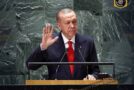

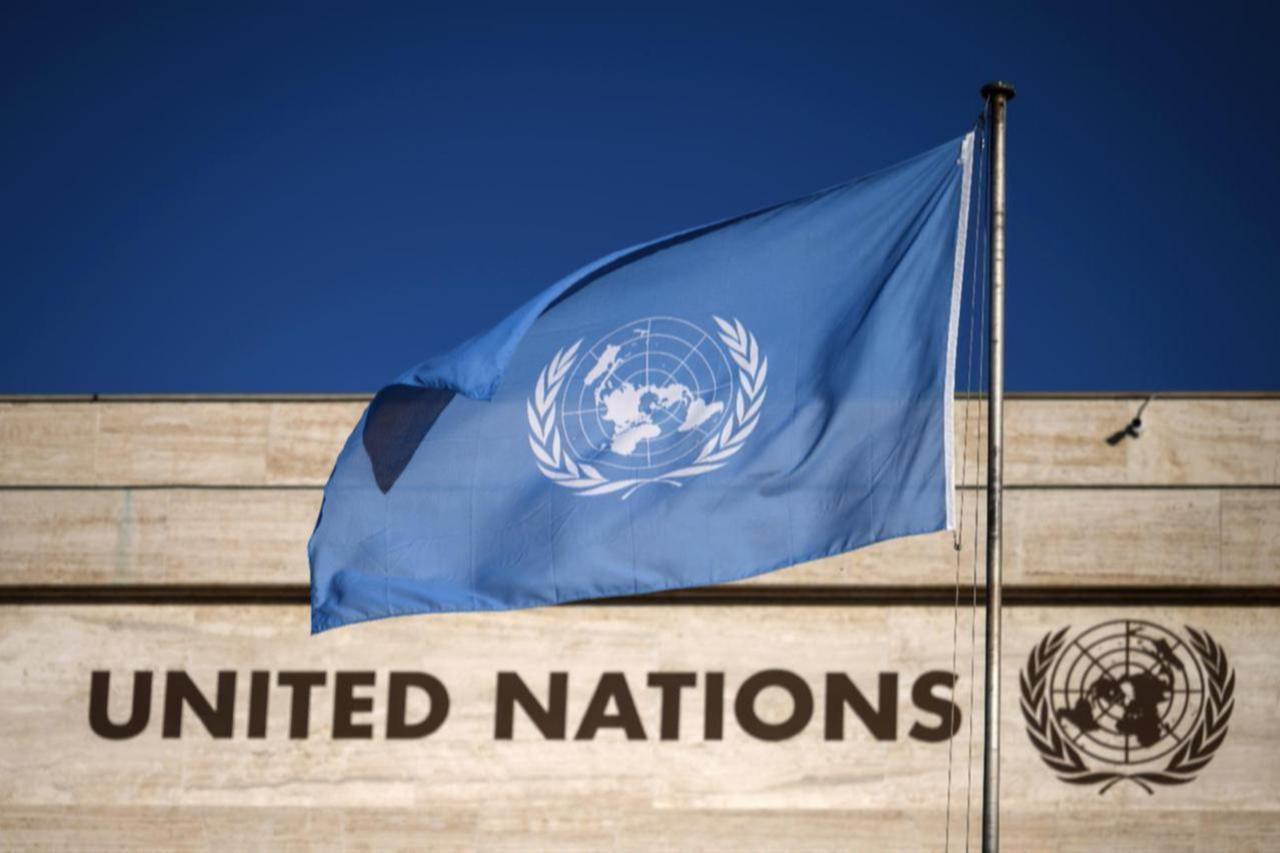
This week, many world leaders who traveled to New York City for the United Nations’ 81st General Assembly sessions said the United Nations (UN) needs reform. Several leaders—most notably Turkish President Recep Tayyip Erdoğan—criticized the UN Security Council’s five permanent members*, arguing that this arrangement fails to create an equitable and fair order. Argentine President Javier Milei went even further, emphasizing that the UN is a dysfunctional organization that serves no useful purpose. So, what concrete proposals exist for reforming the UN—an institution no one is satisfied with? It is worth examining this matter now.
1. The UN80 Initiative and Three Key Areas of Work: The most current and primary reform project currently underway is the UN80 Initiative, launched by Secretary-General António Guterres to mark the UN’s 80th anniversary. Aiming for a systemic restructuring, this project has moved from the “diagnosis phase to the design and implementation phase.”
The initiative aims to help the UN operate more cost-effectively and focus more on results amid global budget cuts and financial vulnerabilities. Efforts are underway across three main workstreams:
A-) Secretariat Efficiency and Bureaucracy Reduction: The goal is to eliminate red tape within the UN Secretariat’s administrative machinery. Under this initiative, the revised budget has led to a 21-20% reduction in Secretariat staff positions, and 11 separate support teams in New York have been merged into a single shared administrative platform. Additionally, thousands of posts in high-cost locations are being relocated to lower-cost regions.
B-) Streamlining the Mandate System: Over the years, the UN has added new responsibilities but rarely terminated outdated mandates. The landmark General Assembly Resolution 80/251 introduced a new discipline on mandates. Thanks to the newly established “Mandate Registry“, over 40,000 resolutions have been made searchable, resulting in a 30% reduction in mandate references across the Secretariat.
C-) Structural and Programmatic Reorganization: Merging entities with overlapping roles is on the agenda. For instance, effective January 1, 2027, and subject to UN General Assembly approval, UNSSC and UNITAR will be merged into a single entity named the UN Institute for Talent and Learning Innovation (UNICLI). Similarly, plans are in place to consolidate climate and environment units, human rights bodies, and certain humanitarian aid agencies.
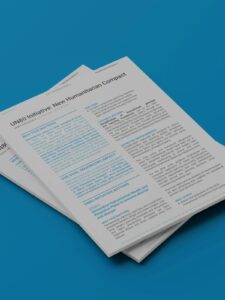
2. Operational Reform Projects in Crisis Zones: In a polarized political climate where diplomatic consensus is slow to emerge, the UN has chosen to transform into a functional bridge that delivers practical infrastructure projects on the ground. Recent examples include the New Humanitarian Compact, established to reduce bureaucratic duplication and integrate global supply chains, which is being piloted in crisis zones such as Afghanistan, Haiti, Palestine, Somalia, and Sudan. In addition, the 2720 Mechanism and Gaza Infrastructure Strategy aim to overcome political deadlocks; electricity and infrastructure rehabilitation projects in Gaza have been defined not as political concessions, but as “security assets“. This system, in which UNOPS engineers serve as technical supervisors, replaces mistrust with models of verifiable progress.
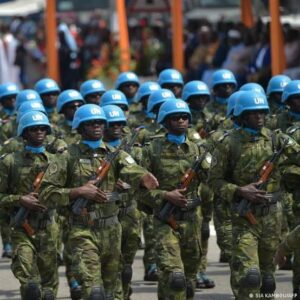
3. Peacekeeping and Security Reforms: The architecture of peace operations is one of the most scrutinized and frequently criticized areas of the UN.
Peace Operations Review: Periodic strategic reviews adapt the UN’s toolkit to today’s complex geopolitical risks and establish a more flexible peace operations architecture.
Integration Efforts (2017): The “UN Peace and Security Reform“, implemented during Guterres’s first term, enhanced operational coherence by more closely integrating the peace pillar with the human rights and development pillars.
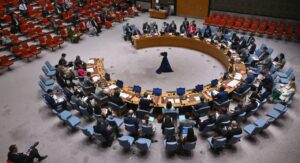
4. UN Security Council Reform: While previous proposals were aimed primarily at improving the UN’s functioning, the most serious initiatives regarding UN reform—specifically concerning law and justice—focus on altering the structure of the UN Security Council. The Security Council’s binding resolutions, combined with the five permanent members’ ability to shield themselves in every respect through their veto power, have drawn criticism from other states.
Abolition or Limitation of the Veto Power: Some countries, such as Türkiye, argue that crisis resolution cannot be left to the will of a few capitals; they demand either the complete abolition of the veto system or its restructuring so it cannot block the majority’s will. Turkish President Erdoğan summarizes this with his slogan: “The world is bigger than five.” Although neither Türkiye nor the opposition has put forward a concrete proposal, the general view is that a new system could be established in which decisions adopted by a majority in the UN General Assembly would be binding. A separate initiative—supported by countries like the UK, France, and Mexico—proposes that permanent members voluntarily refrain from exercising their veto rights in cases of “mass atrocities” and crimes against humanity.
Number of Members and Equitable Representation (G-4 and Others): The G-4 group—comprising Germany, Japan, India, and Brazil—calls for more permanent and non-permanent Council members and seeks permanent membership for itself. Countries in Africa, Latin America, and Asia advocate for fairer and geographically balanced representation of the Global South within decision-making mechanisms.
Strengthening Relations with the General Assembly: Proposals on the reform agenda also include making the Security Council more accountable to the UN General Assembly—where all member states are represented—and ensuring transparency and oversight of its decisions.
However, significant obstacles remain to UN reform. First, amending the Charter (the UN’s constitution) is legally and politically difficult, as the system’s founding actors—the five permanent members holding veto power—are unwilling to relinquish their privileges. Adopting any reform decision requires approval by two-thirds of UN member states in the General Assembly, alongside the absence of a veto from any permanent member. In other words, achieving UN reform is impossible without first persuading the permanent members; yet, expecting them to voluntarily give up their privileges is, undoubtedly, unrealistic.
In this regard, a more rational approach might be to advance UN reform gradually within a long-term framework. For instance, feasible short-term reforms could include an interim arrangement where a majority decision by the General Assembly prevails if a state persistently abuses its veto power in the UN Security Council, as well as increasing the number of non-permanent members on the Security Council from 10 to 20. Consequently, further discussion of this issue is essential.

Prof. Dr. Ozan ÖRMECİ
* The 5 permanent members are: the United States, the Russian Federation, the People’s Republic of China, the United Kingdom, and France.