

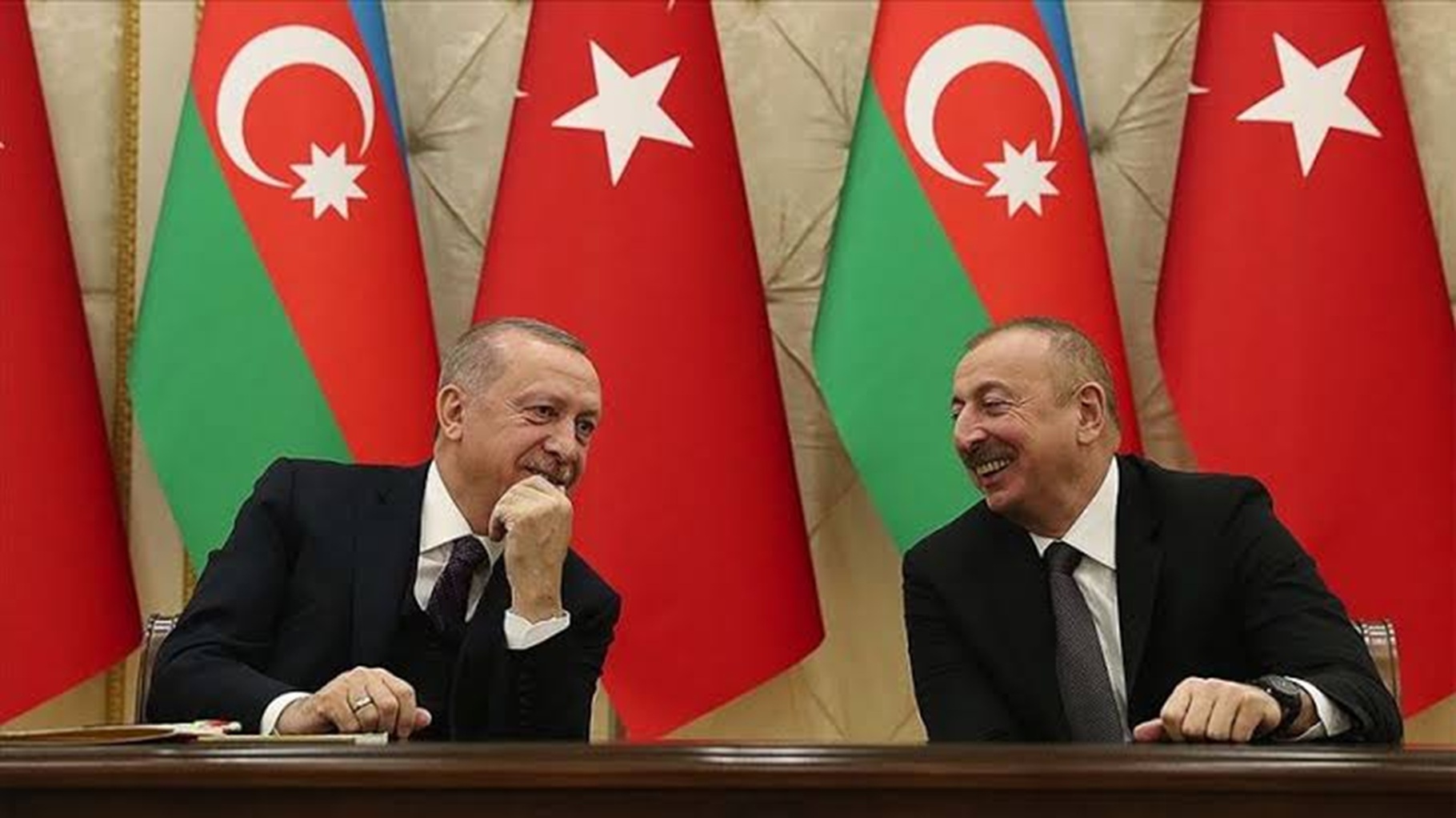
Tension has recently emerged between Türkiye (Turkey) and Azerbaijan, reflected in statements by state officials and media coverage in both countries. However, this is a natural development stemming from the differing geopolitical circumstances and socioeconomic realities of the two nations; it should not—and likely will not—escalate to a level that jeopardizes the strategic nature of their relationship. This article analyzes the causes of the tension between Türkiye and Azerbaijan.
The recent friction between Ankara and Baku stems primarily from religious freedom issues, regional allies (particularly Israel), and shifting power dynamics following the Karabakh victory. Although official bodies have attempted to downplay it, this rift between the two allies—who operate under the principle of “one nation, two states” (tek millet, iki devlet)—has brought deep-seated policy disagreements to the surface.
One of the root causes of the tension has been the recent implementation of a de facto ban on headscarves (turbans) in Azerbaijan—a state that maintains a very strict stance on preserving its secular structure. While the current Turkish government—having long battled such a ban itself—views this measure as an assault on fundamental rights and freedoms, the Azerbaijani state regards it as a necessary step to safeguard its secular character and prevent encroachment upon Azerbaijani society by nations that do not embrace secularism, such as the Islamic Republic of Iran and certain Gulf/Arab states. These differing perspectives have sparked a crisis of sorts between the two nations; notably, however, both sides—and particularly Türkiye—have so far refrained from making critical statements that might further escalate tensions. For its part, Azerbaijani President Ilham Aliyev has expressed irritation over interference in his country’s internal affairs—criticizing it without naming names—and has declared that such interference will not be tolerated.
Another point of contention between the two fraternal states concerns relations with Israel. While Türkiye has recently brought its ties with Israel to the brink of a complete rupture and adopted harsh rhetoric, Azerbaijan continues to maintain a robust partnership—spanning military, intelligence, and economic spheres—with Israel, a nation that supported it during its most difficult times when the Western world remained unresponsive to Armenia’s illegal occupation of Nagorno-Karabakh. Naturally, this situation creates a profound geopolitical misalignment between the two partners.
A third point of contention between the two Turkic states stems from Baku’s efforts—after transferring Karabakh entirely to Azerbaijani control—to dictate the terms of normalization and border opening between Turkey and Armenia, a stance that has caused unease in Ankara. Ankara wants to normalize relations with its neighbor Armenia following Azerbaijan’s territorial gains and seeks to support Nikol Pashinyan’s government, which has shown a very positive attitude toward Türkiye on this matter. In principle, Azerbaijan is not opposed to this either; however, the two Turkic capitals still disagree on certain priorities. Furthermore, the downplaying of the Turkish military support (such as Bayraktar UAVs) that contributed to the Karabakh victory, combined with the perception that history is being rewritten, has sparked a backlash within Turkish nationalist circles.
However, it is certainly unrealistic—at least for now—to interpret this disagreement as a rupture in relations. Indeed, in a statement on October 7, 2026, AK Party Spokesperson Ömer Çelik said there was no political tension between Turkey and Azerbaijan, alleging instead that third countries were trying to sow discord between the two fraternal states. Turkish diplomatic circles tend to regard the matter as closed, maintaining that Türkiye will not interfere in Azerbaijan’s internal affairs and that no official response will be issued regarding Aliyev’s criticisms. In fact, during a recent visit to Baku, Turkish Foreign Minister Hakan Fidan conveyed solidarity, describing the two nations as “two islands of stability” in the region.
Indeed, the strength of the two states’ strategic ties makes such a rupture unlikely. Relations rooted in shared language, ancestry, and culture have acquired a strategic character based on the Shusha Declaration (2021); furthermore, they have progressively deepened through concrete projects such as the Baku-Tbilisi-Ceyhan (BTC) Oil Pipeline, the Baku-Tbilisi-Erzurum (BTE) Natural Gas Pipeline, and the Trans-Anatolian Natural Gas Pipeline (TANAP). More importantly, the two societies’ bonds have strengthened significantly over the years, and their brotherhood has evolved from rhetoric into reality. The visa-free travel arrangement also has a positive impact in this regard. Additionally, both states attach great importance to their membership in the Organization of Turkic States and seek to strengthen it. In this context, while they may undoubtedly act differently on certain issues, it is unrealistic to imagine that the ties between Baku and Ankara would be severed.
For these reasons, these issues should be viewed as the diverging policies of two independent Turkic states and should not be allowed to escalate into hostility.

Prof. Dr. Ozan ÖRMECİ