
Introduction
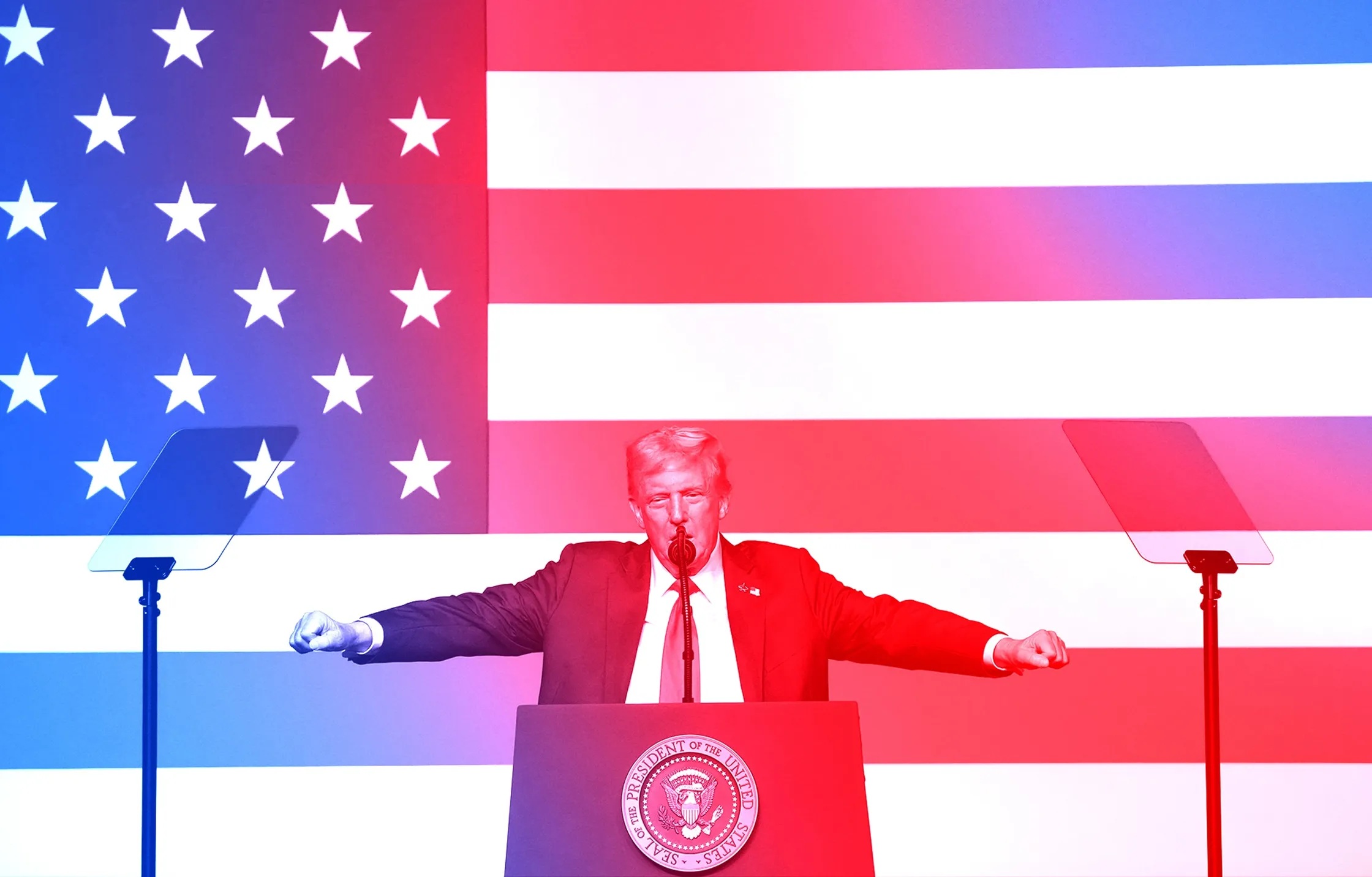
As of 2026, the international system is undergoing one of the most critical transformation processes of the post–Cold War era. In particular, the reemergence of Donald Trump at the centre of American politics is regarded as a development that directly affects not only US domestic politics but also the global balance of power. This is because the political approach represented by Trump differs significantly from the traditional foundations of American foreign policy.
Today, the fundamental issue under discussion is not merely Trump’s renewed political influence. The real question is whether the role of the United States within the global system is undergoing transformation. Put differently, the core question is this: Will the United States continue to sustain the global leadership model it established after World War II, or will it shift toward a more cost-oriented, inward-looking strategy?
The answer to this question will shape not only Washington’s future but also European security, Middle Eastern power balances, US-China competition, and the trajectory of the global economy.
“America First”: A Slogan or a New Strategic Doctrine?
The “America First” doctrine, which lies at the centre of Trump’s foreign policy, represents a fundamental critique of the traditional American understanding of global leadership. This perspective argues that the role assumed by the United States as the guarantor of the international order has imposed heavy economic and political burdens on the American state and society.
Indeed, Trump’s recent statements criticising NATO members and accusing European allies of failing to share the security burden sufficiently demonstrate the continuity of this approach (Reuters, 2026).
According to Trump’s perspective:
- The United States should not bear the cost of every global crisis,
- Allies should contribute more to defence expenditures,
- The American economy should prioritise domestic production over external interventions,
- Strategic competition with China should become the primary focus.
This approach marks a significant departure from traditional American foreign policy. Following World War II, Washington positioned itself not merely as a military power but as the protector of the liberal international order.
However, today, particularly within Republican political circles, the costs of global leadership are increasingly being questioned.
The Economic Burden of American Hegemony
With Trump’s renewed rise, the economic cost of US foreign interventions has once again become a central topic in American political discourse. Especially the wars in Iraq and Afghanistan are frequently cited as examples of unsustainable strategic expenditures.
According to Belasco (2009), the long-term financial costs of the Iraq and Afghanistan wars reached trillions of dollars. Beyond economic consequences, these conflicts also generated social exhaustion and political polarisation within the United States.
For this reason, Trump’s rhetoric resonates strongly among segments of American society who believe that globalisation and prolonged military engagements have negatively affected the American middle class.
What is particularly remarkable is this: For the first time in modern American history, the legitimacy of the United States’ global leadership role is being questioned so openly within domestic politics.
This development is not merely an electoral strategy; it signals a structural transformation in American foreign policy thinking.
The Ukraine War and the Emerging Security Crisis
One of the most debated issues associated with Trump’s political resurgence has been the Russia–Ukraine War.
Trump’s relatively cautious rhetoric regarding military aid to Ukraine has generated serious concerns about the future of European security. This is because Europe’s security architecture has long depended heavily on American military support.
Recent debates within NATO have revealed significant uncertainties regarding the future of transatlantic relations. According to The Guardian (2026), many European political actors fear that the United States may gradually reduce its security commitments in Europe.
At this point, the issue extends far beyond Ukraine itself. The real question concerns whether the United States will continue to function as the primary guarantor of global security.
If Washington moves toward a strategy of selective interventionism:
- Europe may be forced to strengthen its independent defence capabilities,
- NATO’s internal power balance could shift,
- Russia’s geopolitical manoeuvring space may expand,
- China could gain greater influence within the international system.
Thus, Trump’s foreign policy approach carries consequences not only for American politics but also for the global distribution of power.
China: The Central Strategic Rivalry of the 21st Century
One of the defining features of the Trump era has been its increasingly confrontational approach toward China.
From Washington’s perspective, China is no longer merely an economic competitor; it is increasingly viewed as a systemic challenger to American global supremacy.
The emerging competition between the United States and China is now shaped through strategic sectors such as:
- artificial intelligence,
- semiconductor technologies,
- energy security,
- critical minerals,
- trade corridors,
- and digital infrastructure.
Trump’s tariffs and economic pressure policies toward China reflect this broader strategic framework. Washington increasingly perceives economic dependency as a national security vulnerability.
What is particularly significant here is the transformation of American strategic priorities. Whereas post-Cold War US foreign policy focused heavily on the Middle East and counterterrorism, today, great-power competition with China has become the dominant strategic concern.
Indeed, John J. Mearsheimer’s theory of offensive realism argues that great powers continuously seek to maximise their influence within the international system (Mearsheimer, 2001). Contemporary US-China rivalry strongly reflects this theoretical framework.
A New Period of Uncertainty in the Middle East
Trump’s political resurgence may also have significant implications for the Middle East. During his previous administration, US policy toward the region was shaped largely by pragmatic and economically driven priorities.
Key components of this approach included:
- Harsh sanctions against Iran,
- Normalisation efforts between Israel and the Gulf countries,
- Energy-security-centred policies,
- Attempts to limit China’s regional influence.
However, today the Middle East is far more fragile and volatile.
Tensions surrounding the Strait of Hormuz, growing instability in the Red Sea, energy supply security crises, and increasing polarization following the Gaza conflict have once again placed the region at the center of global competition.
Consequently, any future Trump foreign policy doctrine could directly affect:
- global energy markets,
- Gulf security,
- the Iran-Israel balance,
- China’s access to energy resources,
- and Europe’s energy security.
Is the International System Becoming Multipolar?
Current global developments increasingly suggest that the international system is moving away from unipolarity. In the immediate post–Cold War era, American dominance appeared uncontested. Today, however, a far more competitive and multipolar structure is emerging.
From the perspective of Kenneth Waltz’s balance-of-power theory, the rise of new centres of power naturally intensifies international competition.
At the same time, the concept of power itself is changing. Power can no longer be explained solely through military capability.
Today, power increasingly depends upon:
- economic resilience,
- energy security,
- technological production,
- supply chain control,
- digital infrastructure,
- and cyber capabilities.
Therefore, the Trump era represents not merely a change in leadership but a potential accelerator of structural transformation within the international system.
Conclusion: The World Is Entering a New Era of Power Competition
The world today is experiencing a profound geopolitical transition. While America’s role as the leader of the international system is increasingly debated, China continues expanding its economic and technological influence, Russia pursues more aggressive security policies, and the Middle East is once again becoming a central arena of energy-driven geopolitical competition.
Trump’s political resurgence has made these transformations more visible.
Yet the central issue is not simply Trump’s return. The real issue concerns the future direction of American foreign policy itself.
Will Washington continue bearing the costs of maintaining the global order, or will it adopt a more selective and cost-oriented strategic approach?
The answer to this question will directly shape:
- the future of NATO,
- European security,
- US-China competition,
- Middle Eastern power balances,
- global energy security,
- and the future of the international economy.
What is increasingly clear is that the post-2026 international system will no longer operate according to the familiar balances of the unipolar era.
The world has entered a new age of geopolitical competition.
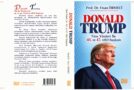
Kapak fotoğrafı: The New Yorker
Dr. Hande ORTAY
REFERENCES
- Belasco, A. (2009). The cost of Iraq, Afghanistan, and other global war on terror operations since 9/11. Congressional Research Service.
- Cordesman, A. H. (2020). The changing US military presence in the Middle East. CSIS.
- Mearsheimer, J. J. (2001). The tragedy of great power politics. W.W. Norton.
- McInnis, K. J. (2021). Global posture review. Congressional Research Service.
- Reuters (2026). Trump’s foreign policy agenda and NATO debates. Reuters.
- The Guardian (2026). Trump, NATO and the future of US global leadership. The Guardian.
- Waltz, K. N. (1979). Theory of international politics. McGraw-Hill.